
The shaggy wolf cut with bangs is the rebellious cousin of the regular wolf cut — heavier layering, more crown volume, and a fringe that adds attitude instead of softness. Where a curtain-bang wolf cut leans romantic, this version leans cool-girl, rockstar, “I didn’t try this hard” energy.
This guide breaks down the cut itself, the different bang styles you can pair with it, how it behaves across hair types, and exactly how to keep it looking intentionally messy instead of just messy.
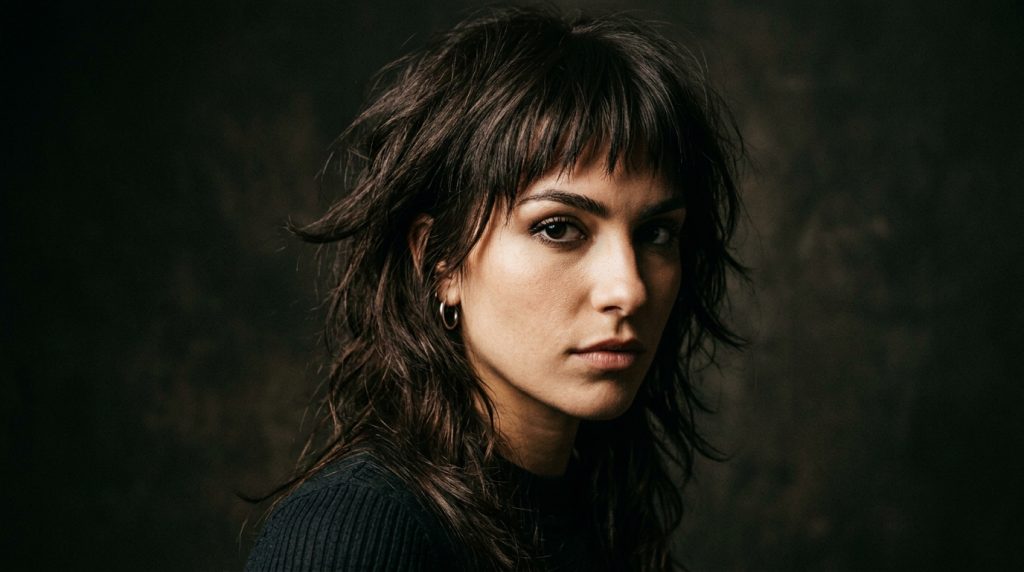
What Makes a Wolf Cut “Shaggy”
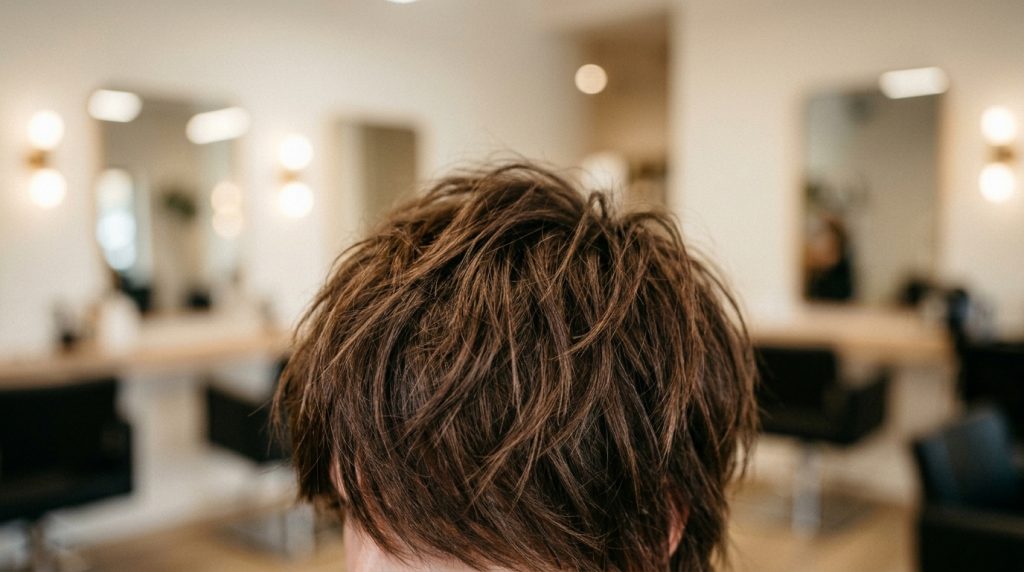
Not every wolf cut qualifies as shaggy. The shaggy version is defined by heavier, more aggressive layering — short, choppy pieces stacked densely at the crown that create real volume and texture, not just subtle movement. The layers are usually razor-cut or point-cut rather than blunt, which is what gives the wispy, slightly unraveled look at the ends.
Add bangs to that structure, and you get a cut that’s full of texture from forehead to ends — nothing about it reads polished, and that’s the point.
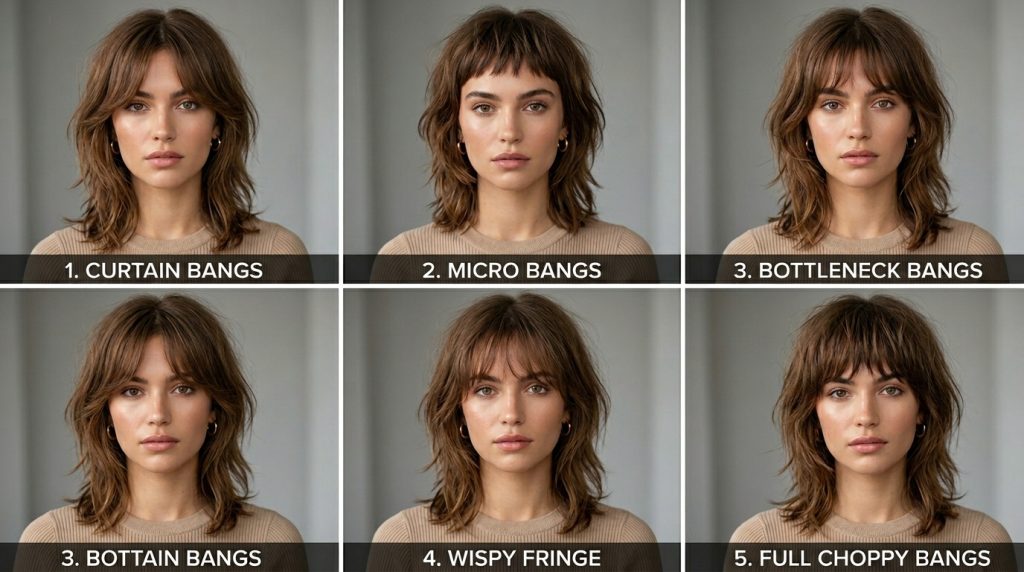
Choosing Your Bang Style
This is where the shaggy wolf cut really opens up, since the bangs do most of the work in setting the mood:
- Curtain bangs — center-parted, sweeps open on both sides. The softest option; good if you want shaggy texture without looking too edgy.
- Micro bangs — ultra-short, cut just above the brow. The boldest option; sharpens the face instantly and reads the most “high-fashion editorial.”
- Bottleneck bangs — narrower at the top, flaring wider near the cheekbones. A 2026 favorite because it bridges the gap between curtain and full bangs without committing to either.
- Wispy fringe — thin, feathered pieces that blend straight into the layers rather than standing apart as a distinct fringe. The lowest-commitment option since it grows out with almost no awkward stage.
- Full choppy bangs — straight across but heavily textured at the ends. The most dramatic, best suited to thicker hair that can support the weight.
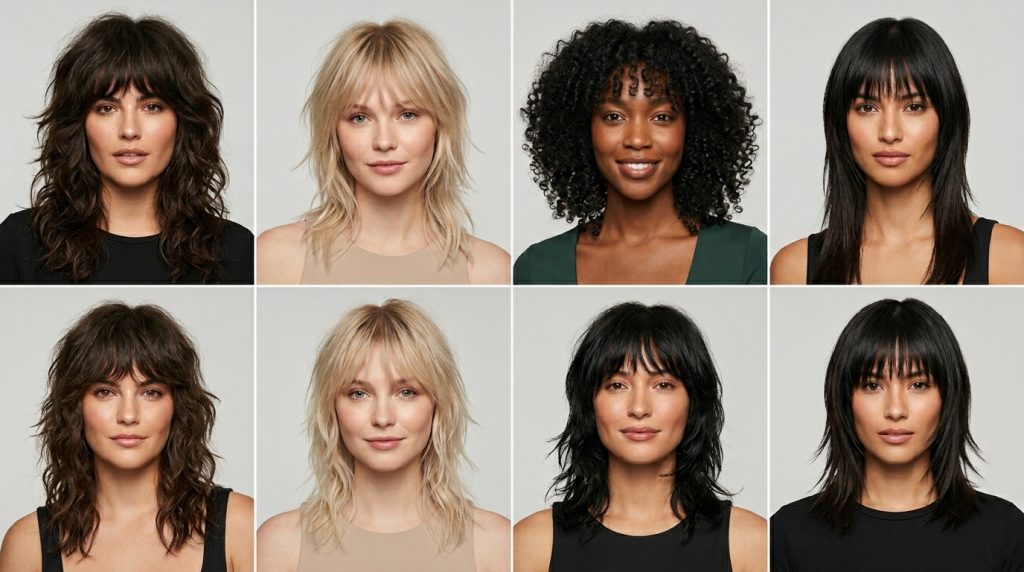
Best Hair Types for This Cut
Medium to thick hair is the ideal canvas — there’s enough density for the heavy layering to create real separation and volume without looking thin or wispy in the wrong places.
Fine hair can absolutely wear this cut, but needs a lighter hand with the layering — too much removal on already-thin hair can leave bald-looking patches at the ends. Ask for layers concentrated more at the crown and less throughout the lengths.
Curly and coily hair is one of the best matches for the shaggy wolf cut specifically, since the natural texture does half the styling work. Layers should be cut slightly longer than the target length to account for shrinkage, and a curly bang style (rather than a flat-ironed fringe) keeps the whole look cohesive.
Straight, silky hair needs help — point-cutting, texturizing scissors, or a perm/wave treatment on the ends is often necessary, or the layers can fall flat instead of separating.
Styling for Maximum Texture
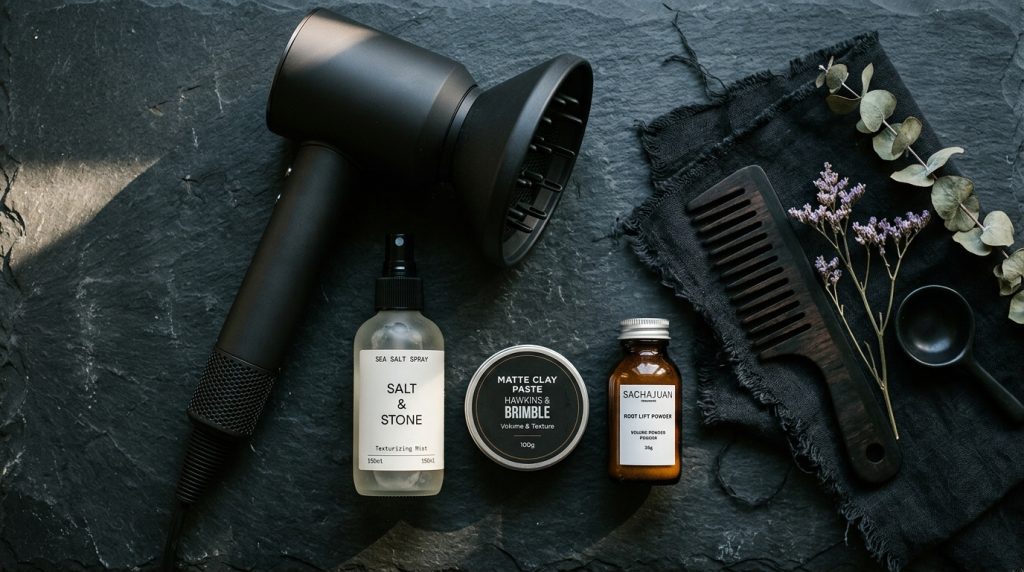
- Apply product to damp hair, not dry hair. A volumizing mousse or salt spray works best when hair is still 60-70% wet.
- Dry upside down or with your head tilted forward for 30-60 seconds to build root lift before finishing.
- Diffuse or rough-dry, scrunching sections as you go — never smooth-brush a shaggy wolf cut, since brushing is what kills the texture.
- Twist small sections around your finger while drying for extra piece-y separation at the ends.
- Finish with a texturizing or matte paste worked only through the ends and bangs — this is what gives the “just rolled out of bed but somehow it works” finish.
- Add root powder or dry shampoo at the crown if you want extra height and a slightly gritty texture.
Unlike sleeker cuts, this one is genuinely easier to style imperfectly — uneven texture and asymmetry are part of the look, not a styling failure.
Color That Plays Up the Texture
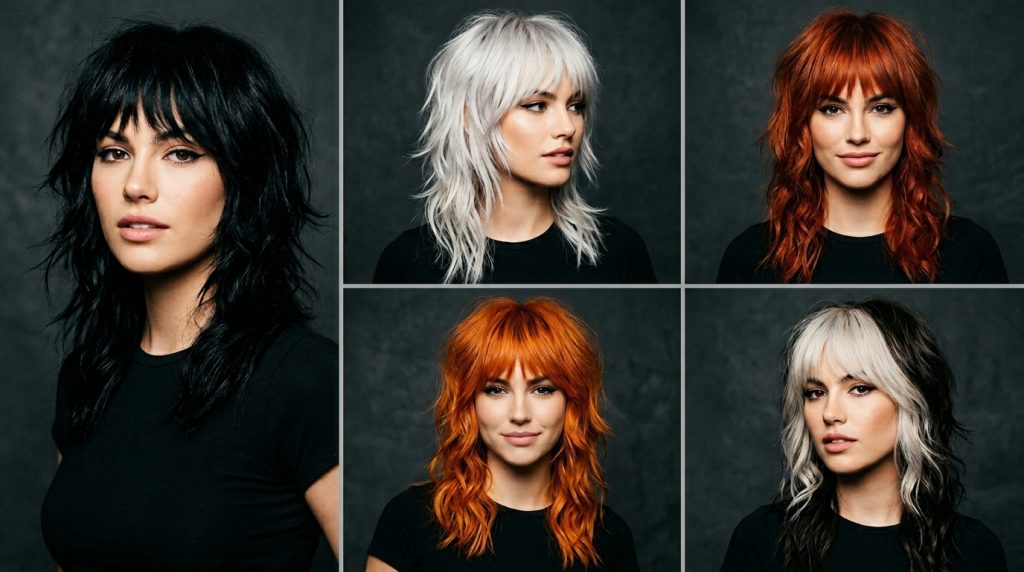
- Two-tone or panel coloring — placing contrasting color in sections (not all-over) makes the choppy layers visually pop as hair moves
- Root smudge with brighter ends — keeps maintenance lower while still showing dimension through the shag
- Bold single tones (copper, platinum, jet black) — work especially well on heavily layered, more dramatic versions since the color reads as one cohesive statement
- Silver or icy tones — particularly striking against razor-choppy layering, since the cool tone emphasizes every separated piece
Avoid soft, blended balayage if you want maximum shag drama — it’s beautiful but tends to mute the choppy effect this cut is built around. Save soft balayage for the curtain-bang, more romantic version of the wolf cut instead.
Maintenance Schedule
| Cut element | Trim frequency |
|---|---|
| Bangs (any style) | Every 4-6 weeks |
| Crown layers | Every 6-8 weeks |
| Overall reshape | Every 10-12 weeks |
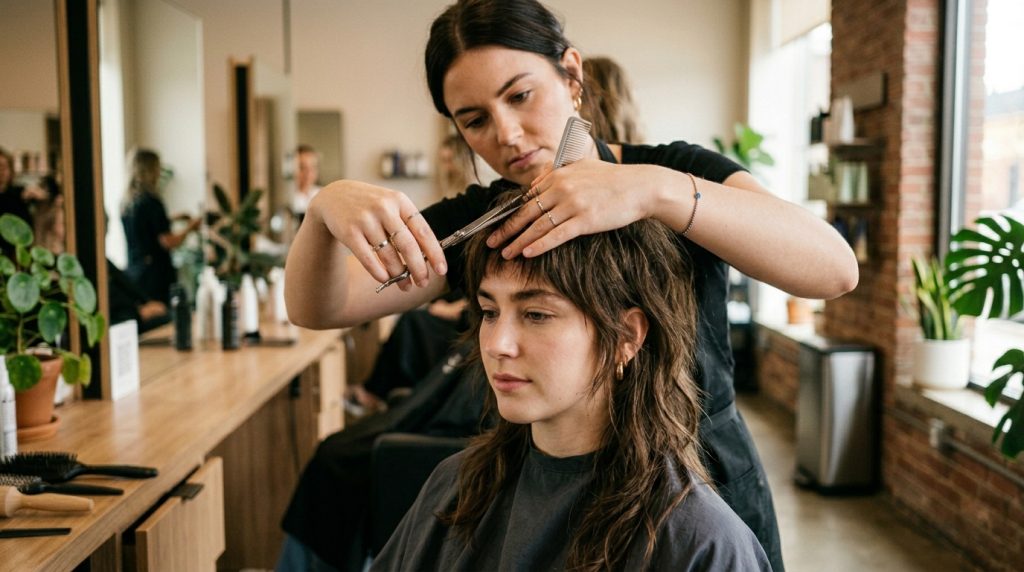
This cut tolerates grow-out better than most because the messiness is part of the design — but the bangs specifically will start looking unintentional (rather than styled) faster than the rest, so don’t skip those touch-ups even if you stretch the full reshape.
Who Should Skip This Cut
Be honest with yourself about two things before booking: how much you’re willing to use styling product daily, and how you feel about visible regrowth and asymmetry between trims. If you want a cut that looks the same wet or dry, brushed or not, this isn’t it — the shaggy wolf cut needs a little product and a little texture every single day to look intentional rather than simply unkempt.

Final Thoughts
A shaggy wolf cut with bangs rewards anyone who wants hair with personality over hair that’s just “neat.” It photographs better with a little wind in it, looks better on day two than day one, and gives you a built-in excuse to skip the flat iron. Pick your bang style based on how bold you want to go, match the layering intensity to your hair’s natural density, and the rest takes care of itself.