
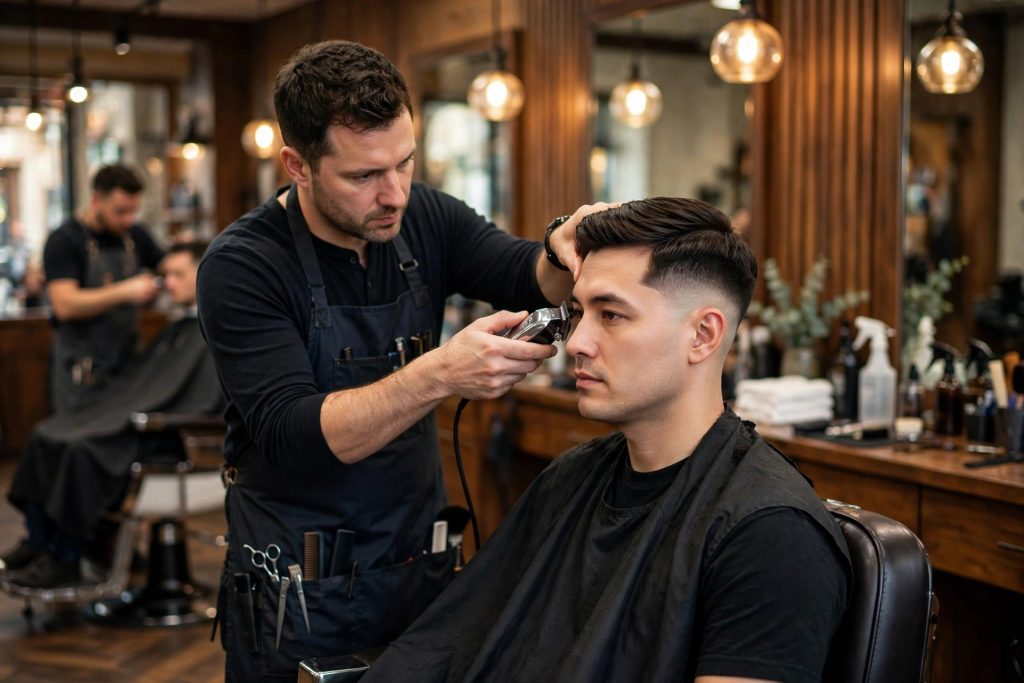
The temple fade is one of those haircuts that quietly does the heavy lifting. Instead of fading the entire side of your head, it concentrates a clean taper right around the temples and sideburns, leaving the rest of your style untouched. That focused detail makes every other part of the cut — your curls, your waves, your length — look sharper and more intentional.
What makes the temple fade so popular is how well it adapts. It works with nearly every hair texture, suits professional and casual settings, and gives barbers a precise canvas to show off their skill. If you are thinking about getting one, here are fifteen fresh ways to wear the temple fade this year.
Sharp and Clean Temple Fades
1. Crisp Low Temple Fade
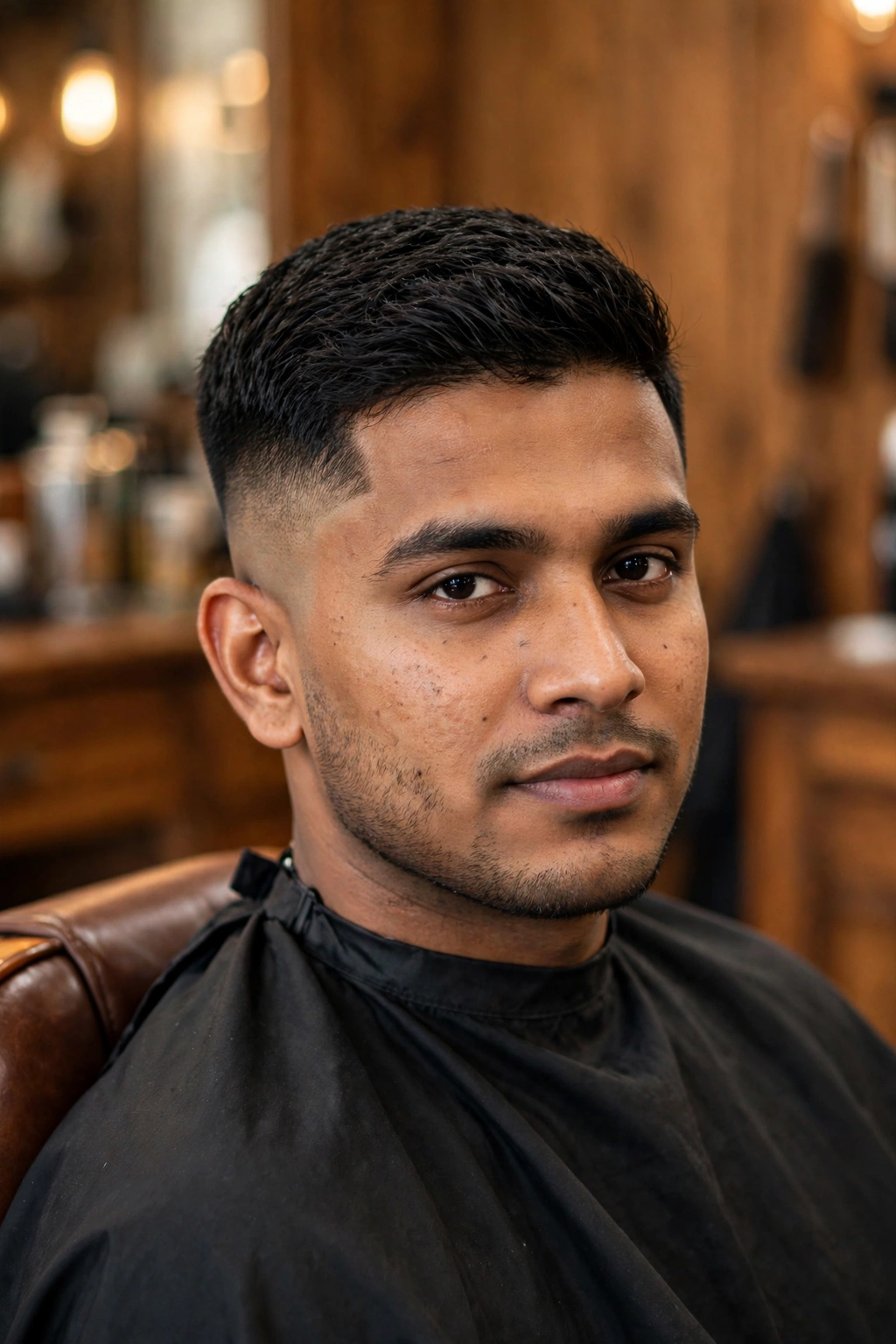
The crisp low temple fade is the quiet professional of the temple fade family. The taper begins low, hugging just above the sideburn and melting into the skin around the temple in a tight, controlled gradient. Because the fade stays low, the top of your hair keeps its full shape, which makes this cut ideal for men who want a polished office look without sacrificing length. Ask your barber to keep the transition seamless — any harsh line will show up against the smooth fade. This style works beautifully with short to medium tops, whether you wear them forward, swept aside, or lightly textured. A quick cleanup every two to three weeks keeps the fade crisp, and a dab of matte clay helps the top hold its shape all day.
2. Clean Line-Up Temple Fade
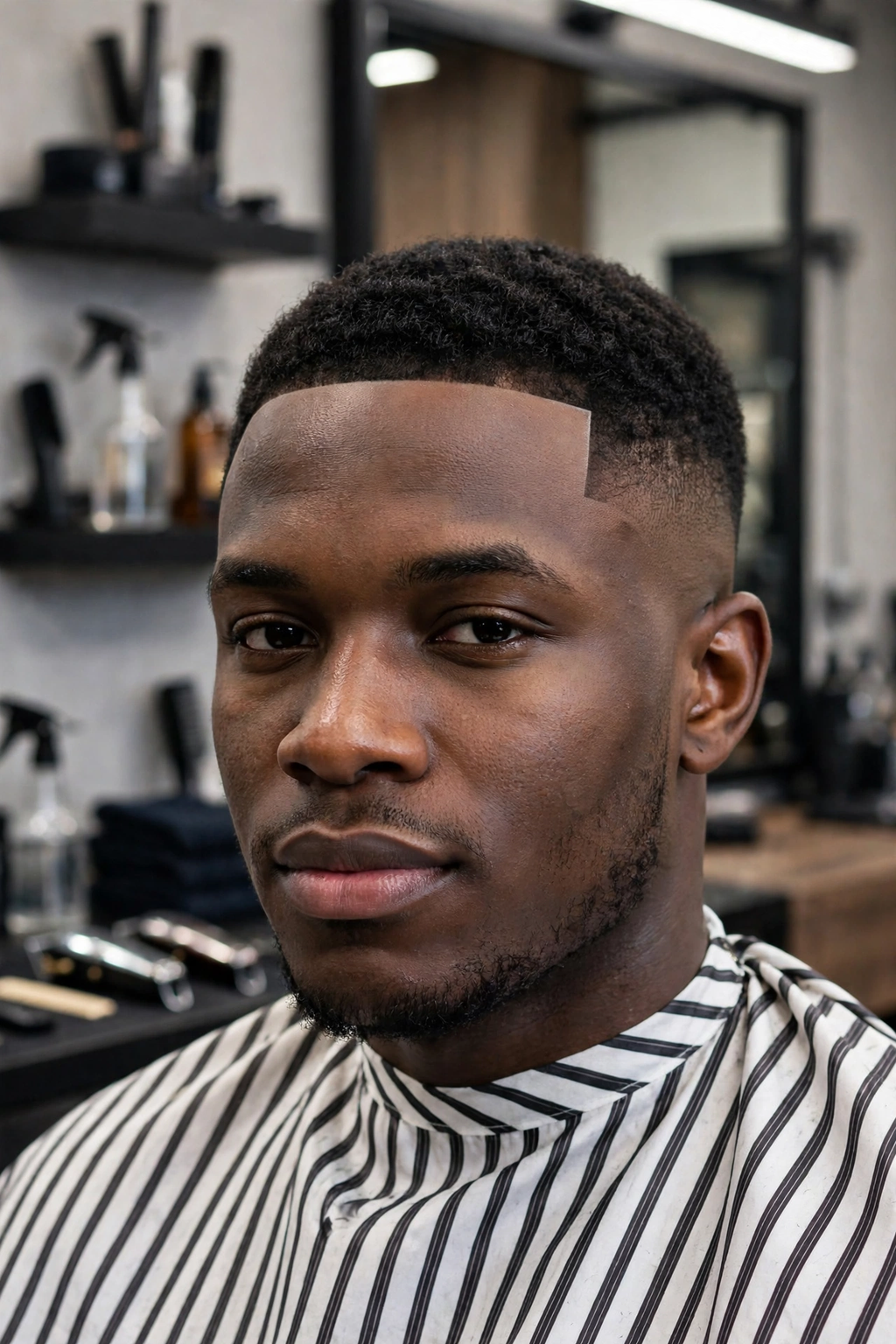
Few combinations look as sharp as a precise line-up paired with a temple fade. The barber squares off your hairline and corners with a trimmer, creating razor-straight edges, while the temple fade softens everything just behind the hairline for a balanced finish. The contrast between the geometric hairline and the smooth taper is what makes this cut photograph so well. It is especially popular with textured and curly hair, where the defined edges frame the face beautifully. To keep the line-up looking fresh between visits, avoid pushing your own edges — a steady hand takes practice, and most barbers offer quick edge-up appointments. Pair it with a light curl enhancer on top and you have a clean, confident look that works from the gym to a night out.
3. Slight Temple Fade
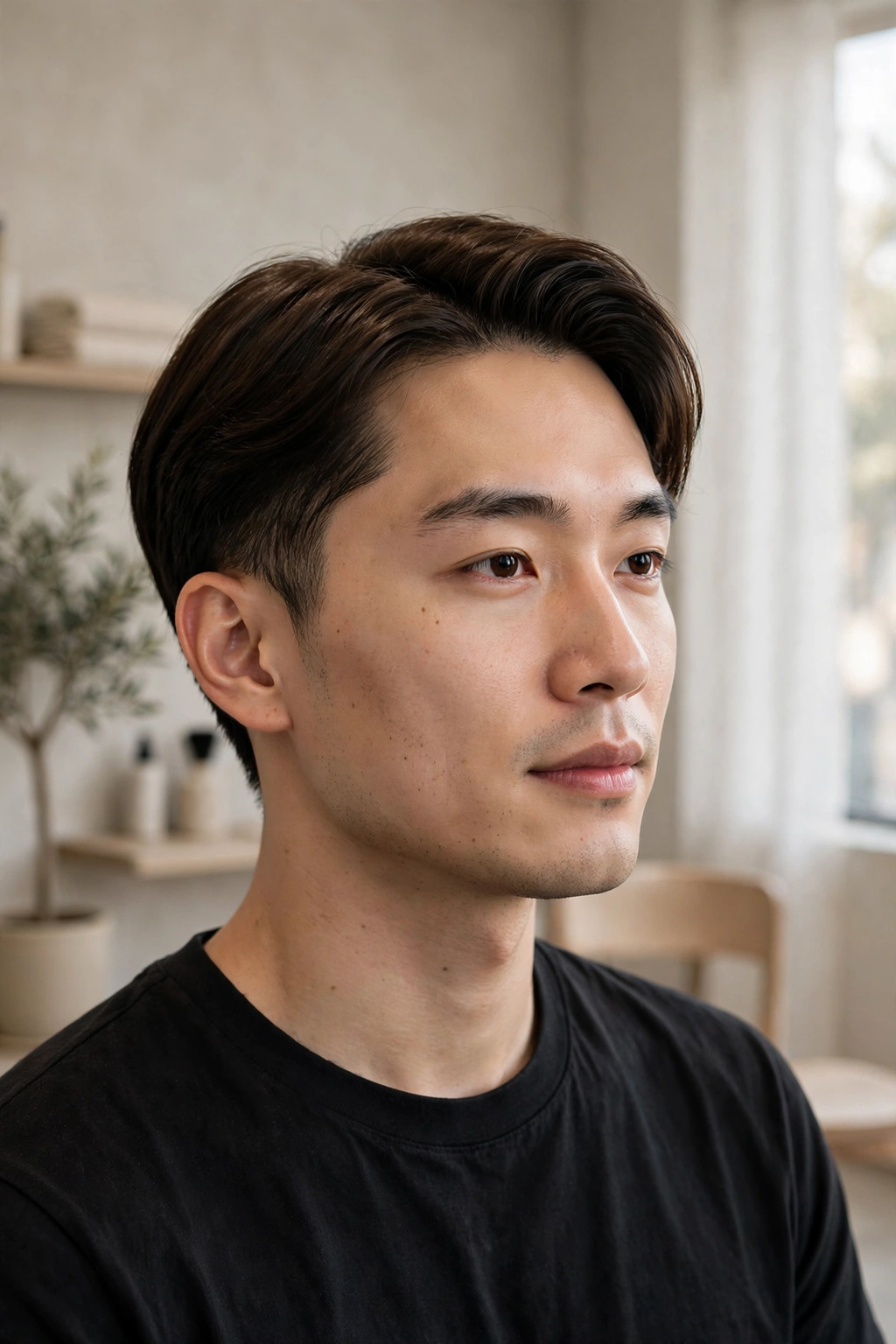
Not every fade needs to make a statement. The slight temple fade is a whisper of a taper — just enough blending around the temples to remove bulk and create a clean contour without an obvious fade line. This is the perfect entry point if you are getting a temple fade for the first time or if you need to keep things conservative for work. It grows out gracefully too, so you will not be chained to the barber chair every two weeks. The cut pairs well with medium-length tops, messy textures, and classic side parts. Ask for a soft taper rather than a skin fade, and let your barber know you want the transition nearly invisible. The result looks naturally neat, as if your hair simply grows that way.
4. Short Temple Taper Fade
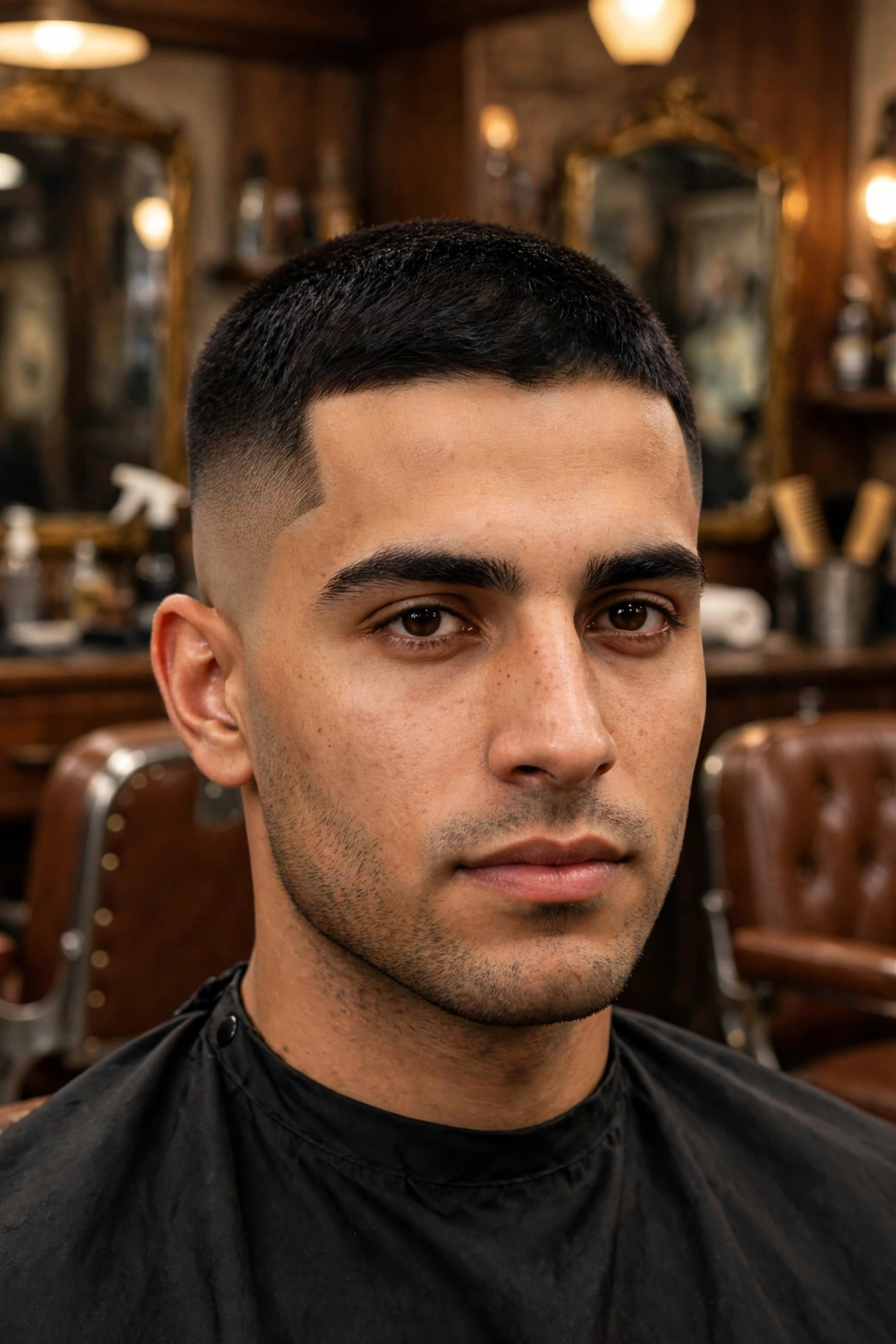
When you want the whole cut to feel compact and clean, the short temple taper fade delivers. Hair is kept short all over the top — often with clippers on a low guard — while the temple fade carves a crisp contour around the temples and sideburns. The result is a sharp, athletic look that needs almost no morning effort. It is a favorite among men with thick, dense hair because the taper removes the boxy bulk that can build up around the ears. The short length also makes the fade itself more visible, so precision matters: a skilled barber will keep the gradient even on both sides. Styling is minimal — a towel dry and a touch of product if you want texture. This is a wash-and-go classic with an edge.
Temple Fades for Textured Hair
5. Afro Temple Fade
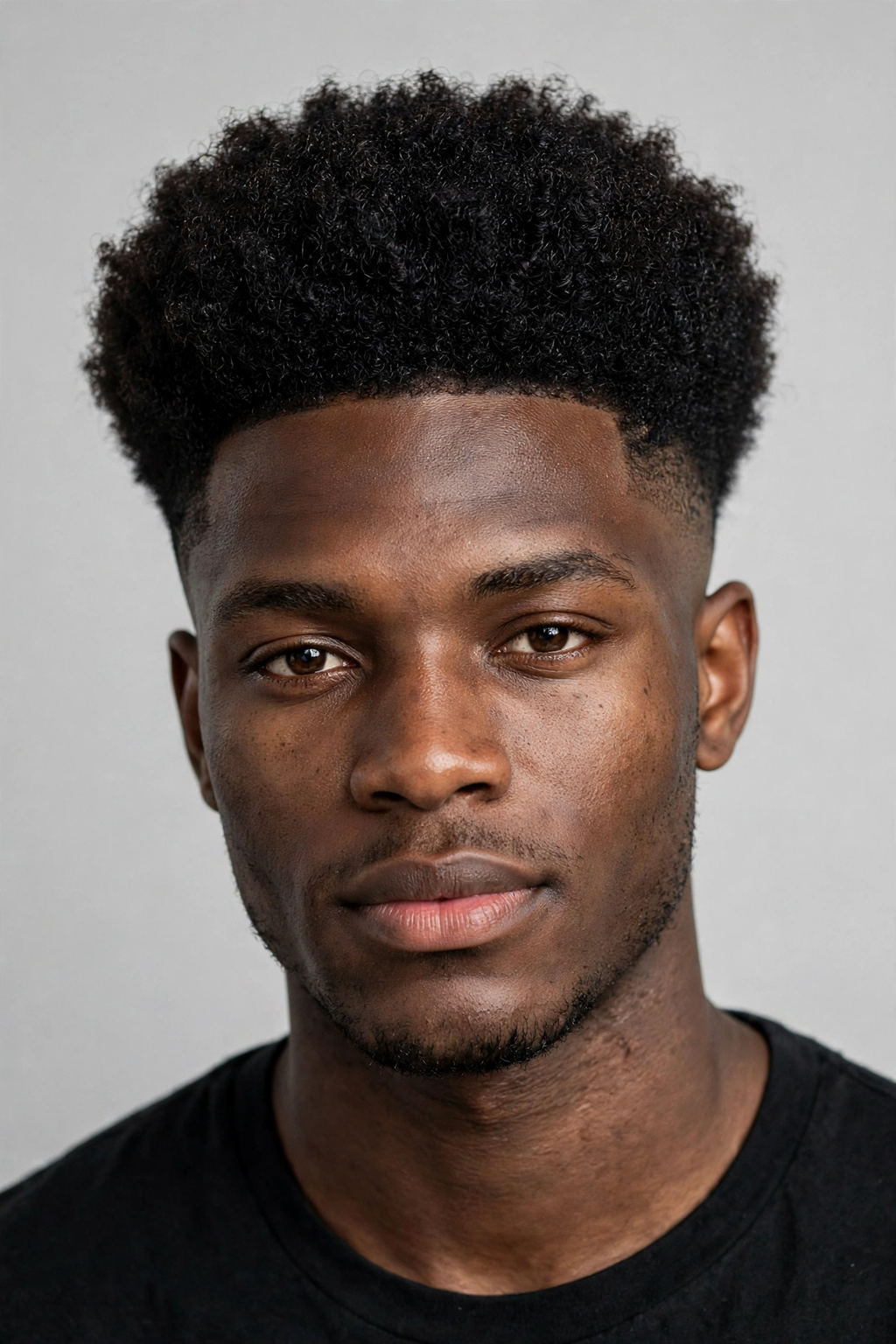
The afro temple fade is a modern barbershop staple for a reason. A full, rounded afro sits on top while the temple fade trims away the sides around the temples, giving the silhouette a sculpted, deliberate shape instead of a boxy outline. The fade creates a clean frame for the face while letting the natural texture and volume of the afro take center stage. Ask your barber to shape the afro to your head shape — rounded for longer faces, slightly wider for rounder ones — and keep the fade low so it does not fight the fullness above. A pick comb and a moisturizing leave-in conditioner are your daily tools; healthy, hydrated hair is what makes this cut look its best. Volume and precision never go out of style.
6. Curly Top Temple Fade
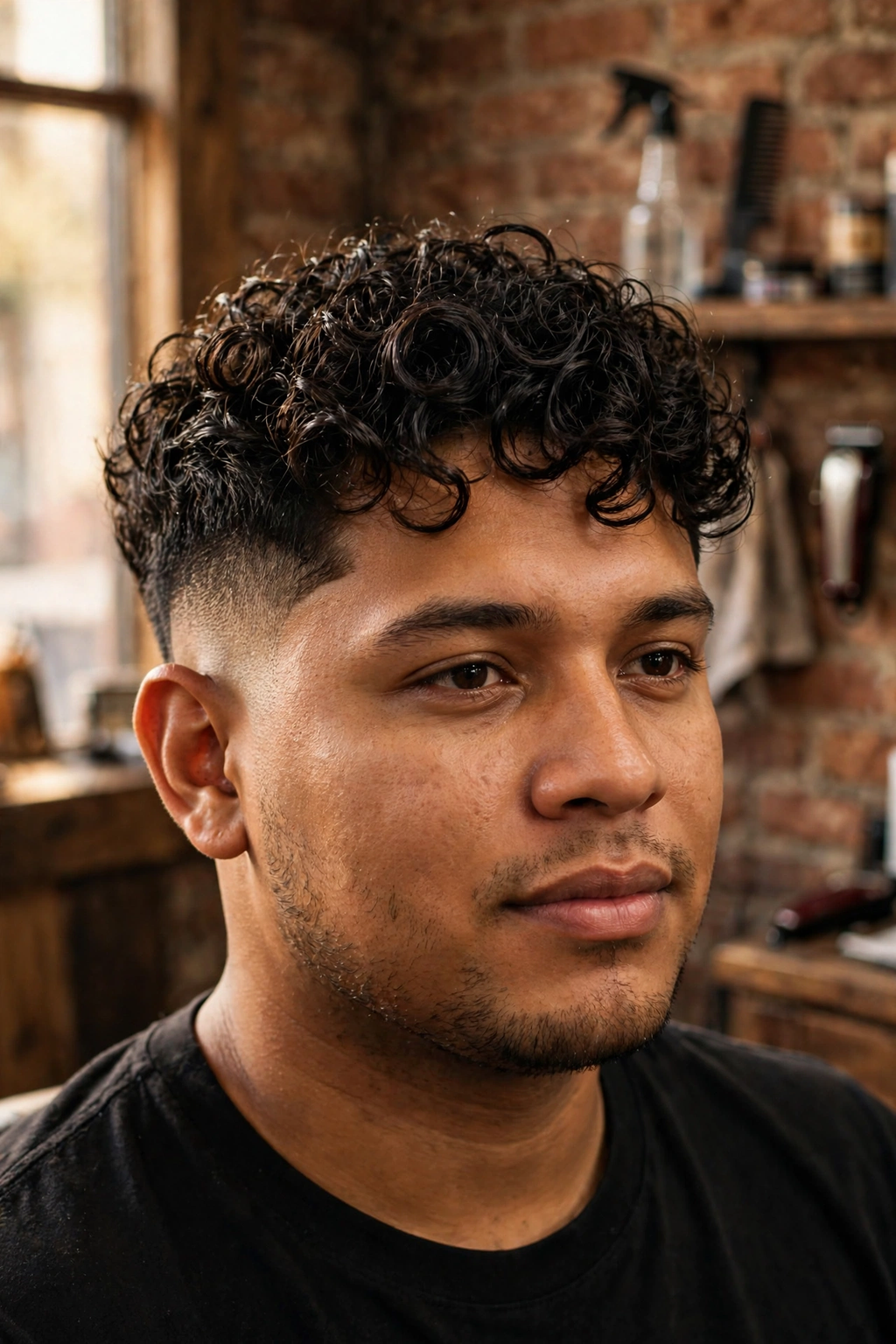
If you have natural curls, the curly top temple fade might be your best haircut decision this year. The top keeps its curl length — whether loose ringlets or tight coils — while the temple fade clears the sides around the ears and temples for a tidy, defined profile. The contrast makes your curls look fuller by comparison, and the clean fade keeps the cut feeling intentional rather than overgrown. The secret is balance: your barber should fade just enough to sharpen the edges without pulling the taper too high. A curl-defining cream applied to damp hair, then air-dried or diffused, brings out the texture. Scrunch once dry for bounce. This cut celebrates your natural pattern while keeping everything below the curl line razor clean.
7. Coily Temple Fade
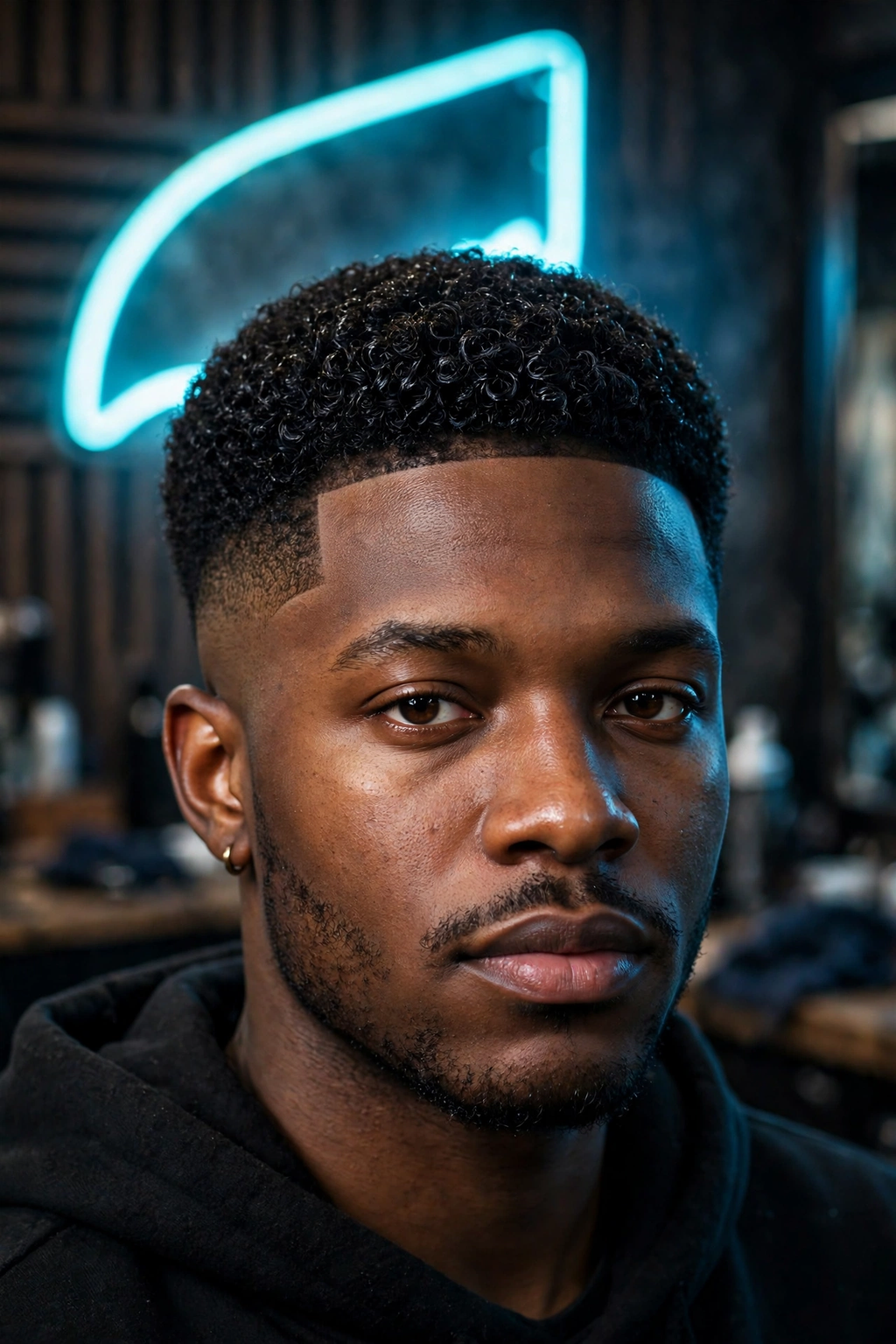
For men with coily, tightly wound hair textures, the coily temple fade offers a tailored look that respects natural shrinkage and density. The top is worn at a short to medium length — often shaped into a rounded or flat-top silhouette — while the temple fade delivers a smooth gradient around the temples that sharpens the whole profile. Because coily hair grows outward, the fade acts as a visual anchor, giving the cut structure and definition. Regular moisturizing is essential: well-hydrated coils hold their shape and look glossy rather than dry. A sponge brush can help add texture and definition to the top. Book trims every two to three weeks, since coily hair can blur the fade line faster. The result is a confident, sculpted cut with undeniable presence.
8. Twist-Out Temple Fade
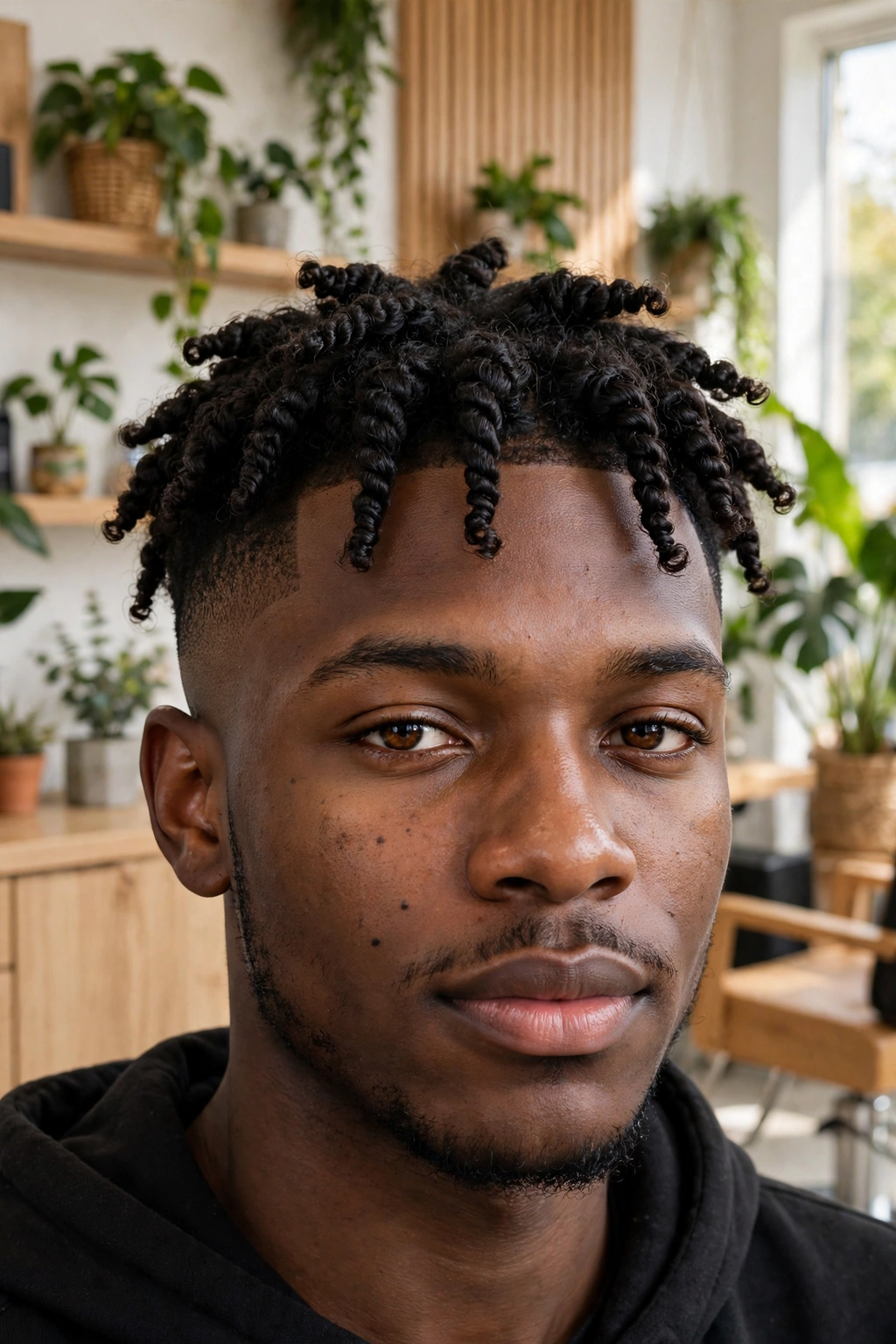
Twist-outs bring beautiful definition and movement, and pairing one with a temple fade takes the style to another level. The top is styled in separated twists or a twist-out that shows off your curl pattern, while the temple fade keeps the sides and temples cleanly faded for contrast. The texture on top against the smooth fade creates a look with real depth and dimension. To style it, twist damp hair in sections with a styling cream, let it set fully, then unravel and separate for volume. Keep the twists on top long enough to show the pattern — the fade below does the sharpening work. This cut is perfect for men who want their natural texture front and center with barbershop precision around the edges. It photographs beautifully from every angle.
Bold and Statement Temple Fades
9. Temple Fade Mullet
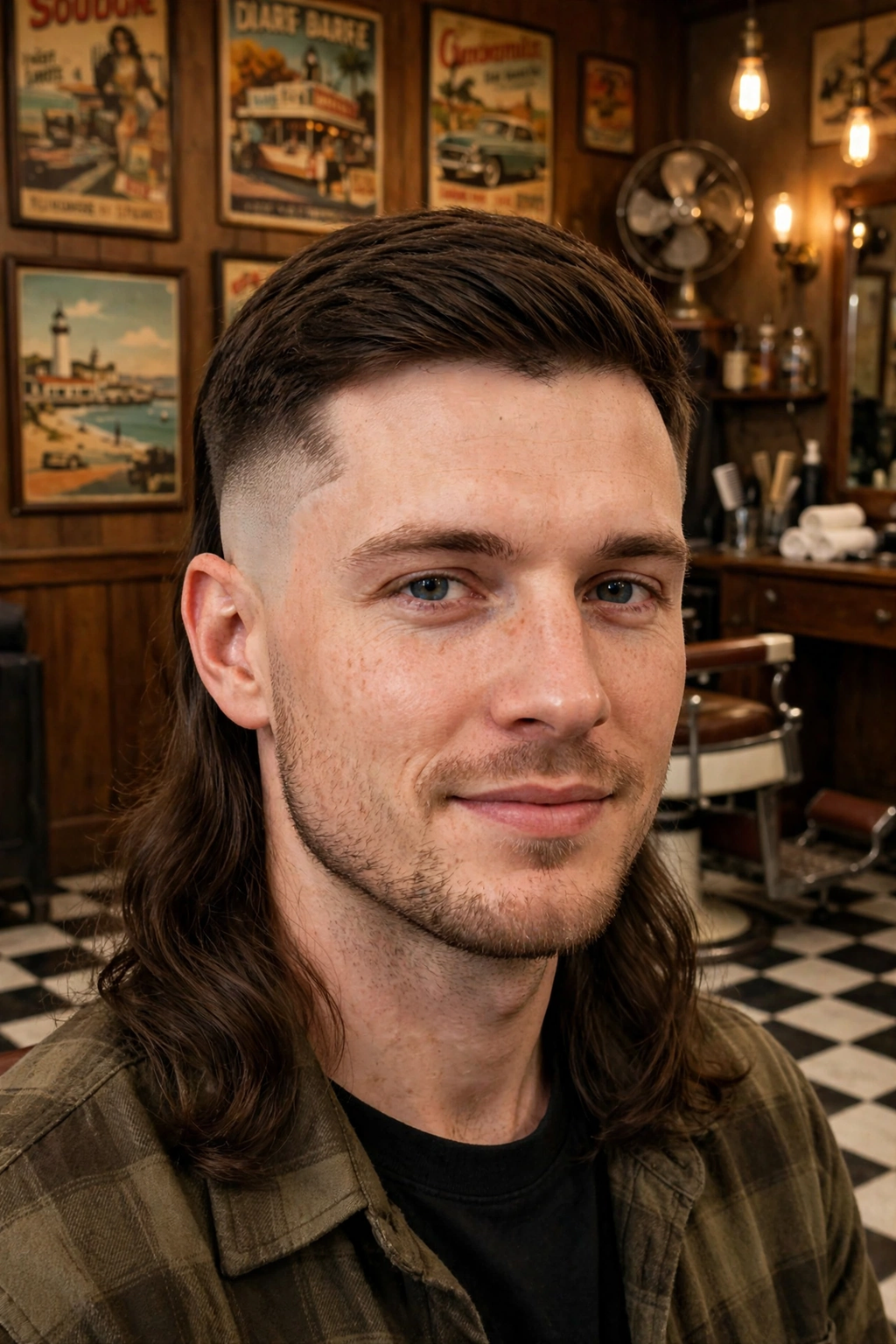
The temple fade mullet is where vintage edge meets modern precision. The back stays long and flowing in classic mullet fashion, while the temple fade carves a sharp contour around the sides, replacing the messy bulk of old-school mullets with a clean, deliberate taper. The result is a cut that reads rebellious but well-executed — the kind of haircut that starts conversations. This style works best with straight to wavy hair that has enough length at the back to show the mullet silhouette. Ask your barber to disconnect the fade slightly from the back length for a bolder statement, or keep it blended for a subtler take. A texturizing spray adds grit to the back, and regular trims keep the fade crisp while the length grows out.
10. Temple Fade Mohawk
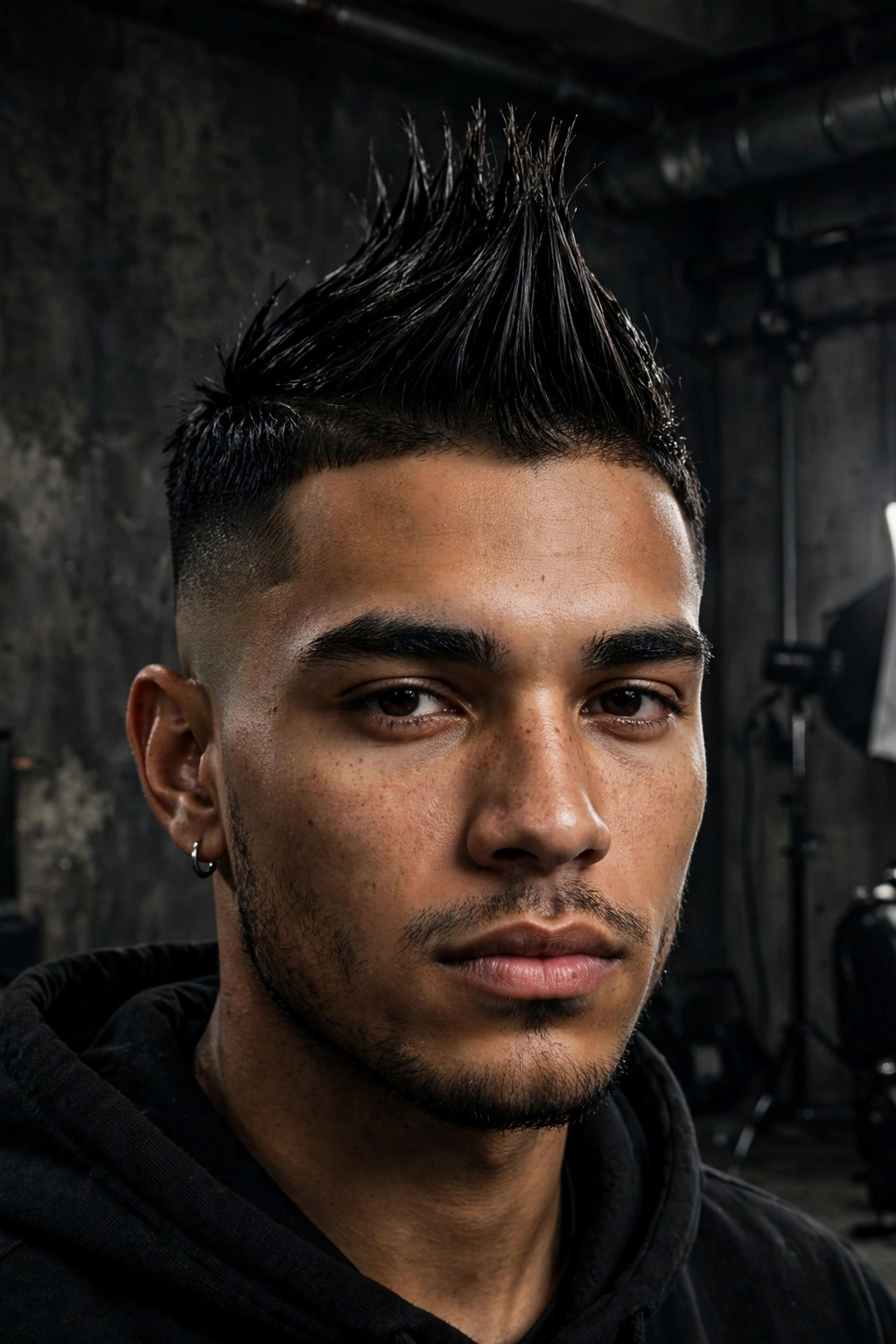
Nothing says confidence like a temple fade mohawk. The center strip stands tall and proud — whether spiked, curled, or textured — while the temple fade keeps the sides around the temples impeccably clean, giving the mohawk a razor-sharp frame. Unlike a shaved mohawk, the temple fade version looks intentional and styled rather than extreme, making it wearable beyond concerts and parties. The key is the height of the strip: taller for drama, shorter for everyday wear. A strong-hold gel or wax locks the strip upright, and a blow dryer adds lift at the roots. Your barber should keep the fade tight so the contrast stays bold. This is a head-turning cut for men who want their hair to make the first impression.
11. Temple Fade With Design Lines
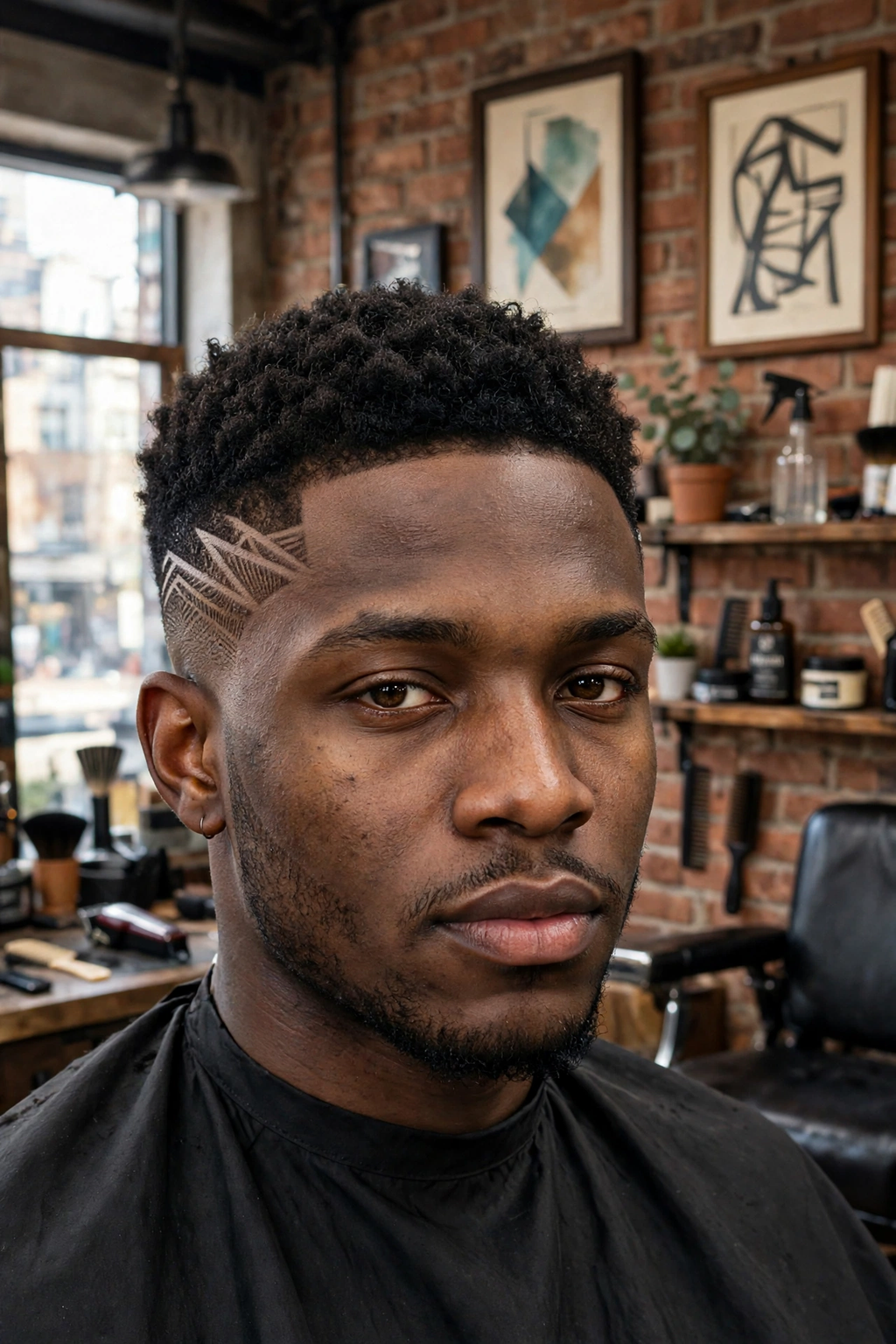
For men who treat their haircut as art, the temple fade with design lines is the ultimate canvas. Your barber etches crisp razor lines, geometric patterns, or curved accents directly into the faded area around the temples, turning a clean cut into a wearable design. The faded base makes the designs pop with contrast, and because the temple area is compact, the artwork stays sharp and detailed. This style demands a barber with real design skill — look at their portfolio before you book. Designs grow out quickly, so plan for touch-ups every one to two weeks if you want them to stay crisp. From simple parallel lines to intricate tribal patterns, the possibilities are endless. It is bold, personal, and impossible to ignore.
12. Temple Fade Faux Hawk
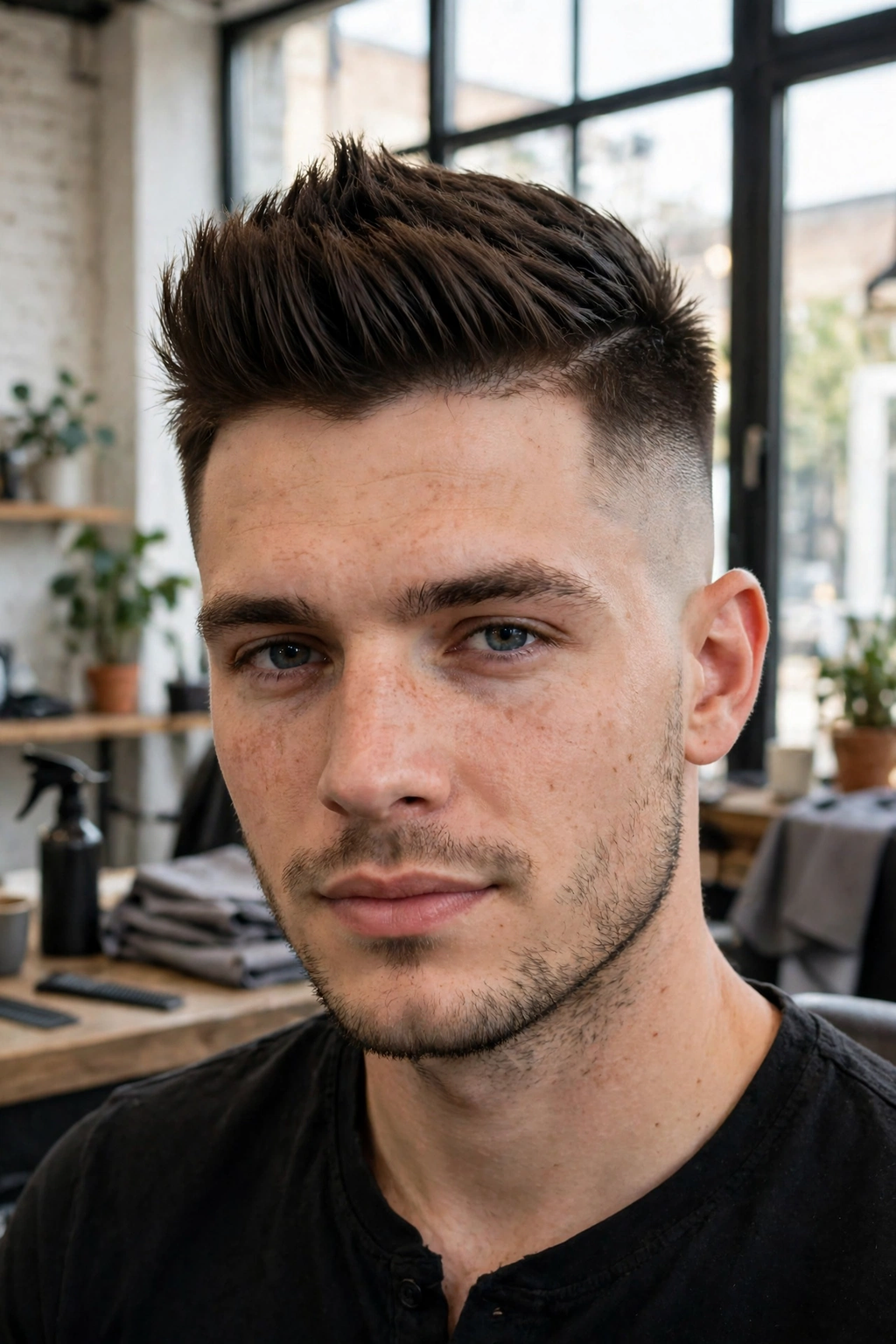
The temple fade faux hawk gives you the attitude of a mohawk without the full commitment. Hair is left longer through the center and styled upward into a textured ridge, while the temple fade and tapered sides slim the profile and add definition. Because the sides are faded rather than shaved, the look stays polished enough for everyday wear. Styling takes just minutes: work a matte paste through damp hair, push the center section upward and slightly inward, and finish with a blast of cold air to set it. The temple fade keeps the silhouette tight around the face, which flatters nearly every face shape. This is the perfect entry point into edgier cuts — bold from the front, completely wearable from every other angle.
Polished Everyday Temple Fades
13. Temple Fade Comb-Over
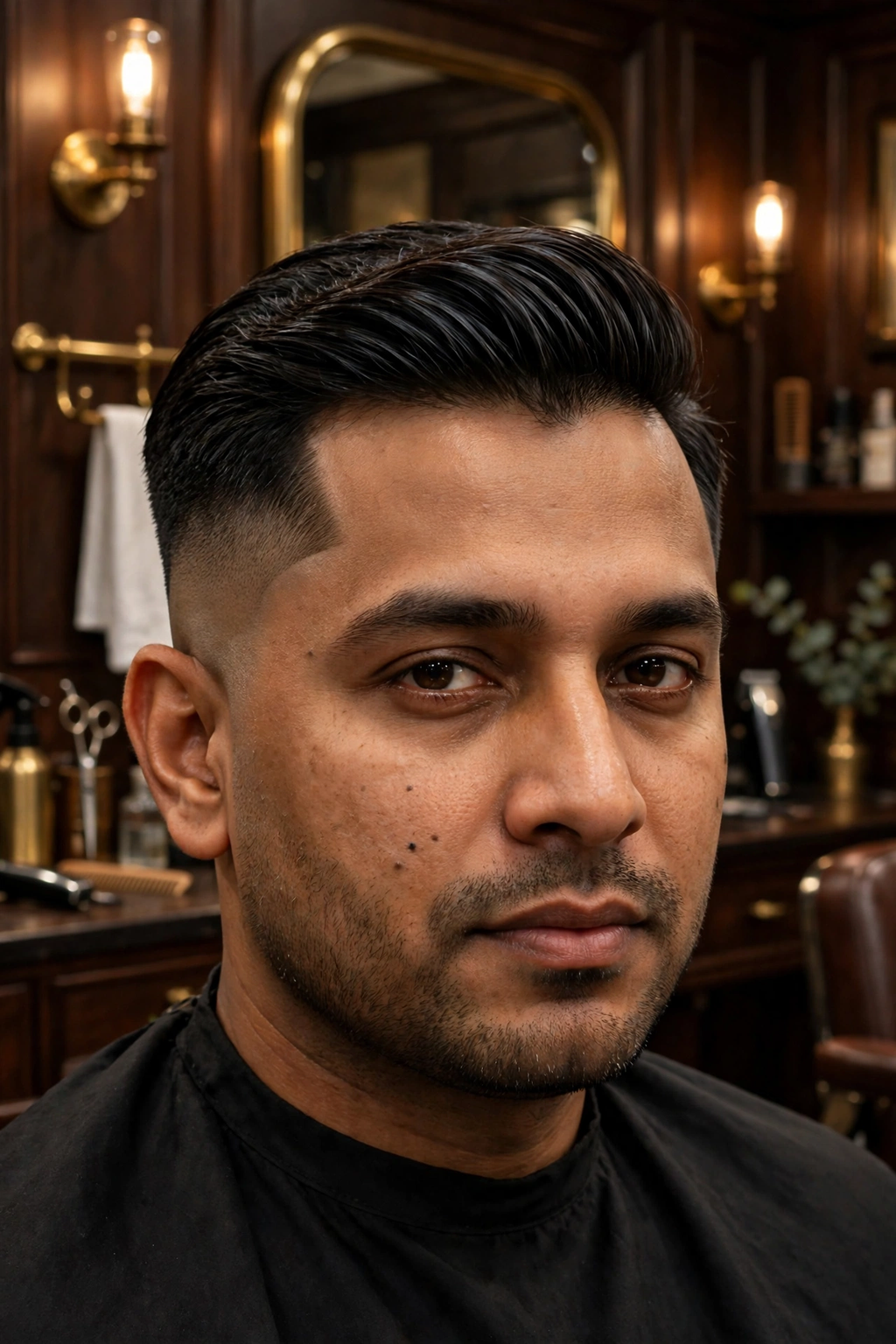
The temple fade comb-over is timeless polish with a modern twist. The top is swept neatly to one side with a clean part, while the temple fade adds a sharp, contemporary contour around the temples that classic comb-overs never had. The fade elevates the whole cut — it takes a conservative style and gives it barbershop credibility. This look shines with medium-length tops and works for straight, wavy, or lightly curly hair. Use a comb on damp hair to set the part, then apply a light pomade for hold and shine without stiffness. The contrast between the structured top and the smooth fade is what makes this cut work in boardrooms and weddings alike. It is proof that a classic can always learn a new trick.
14. Temple Fade Slick-Back
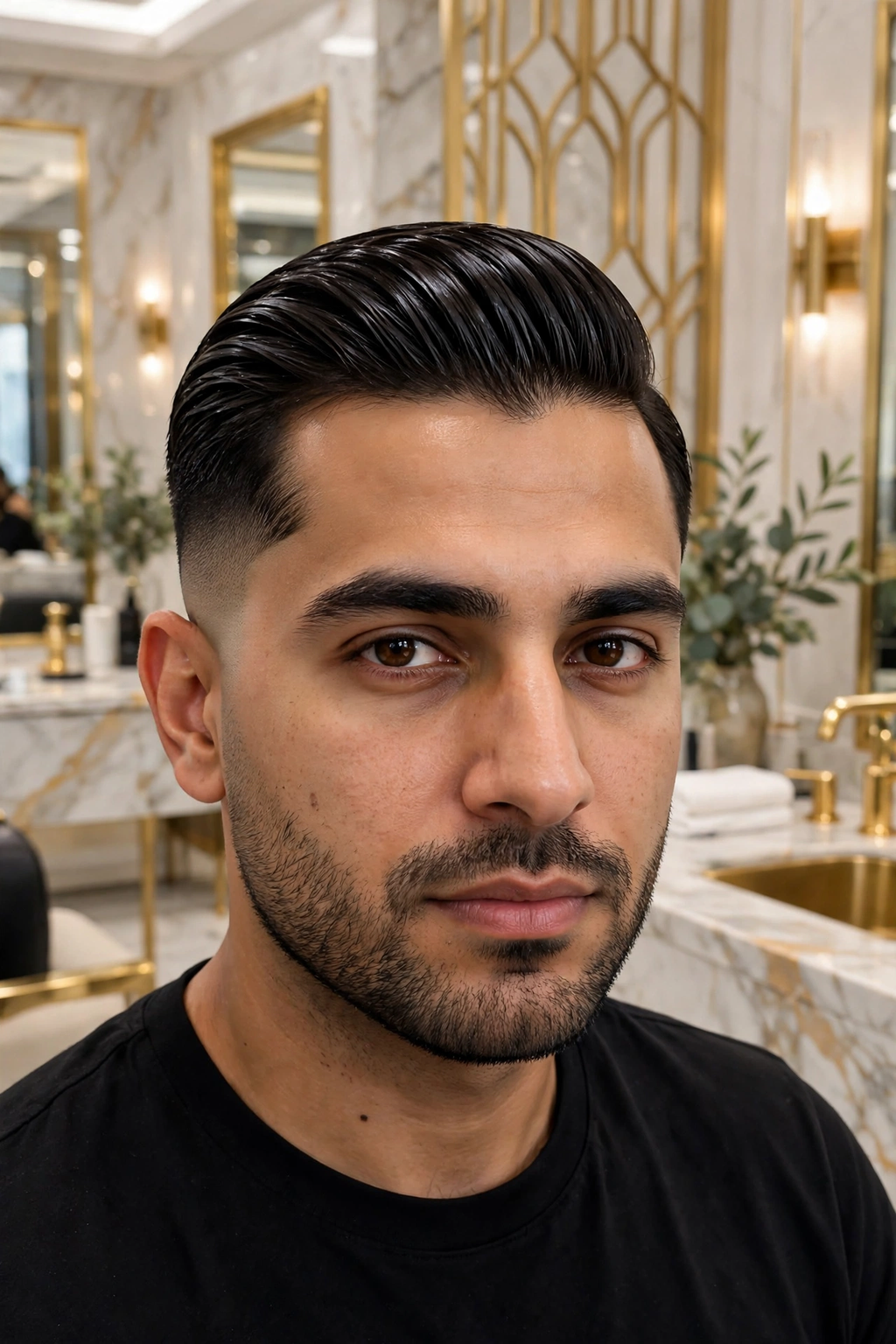
Sleek, confident, and endlessly cool — the temple fade slick-back pairs a glossy swept-back top with a precisely faded temple area for a cut that looks expensive. The slick-back shows off your hairline and bone structure, while the fade keeps the sides and temples tight so the focus stays on the top. A high-shine pomade or gel gives the classic wet-look finish, or choose a matte clay for a softer, more modern take. The key to a great slick-back is even distribution of product from roots to ends, combed straight back without parting. Because the fade is visible on the sides, keep it maintained with regular trims. This is a power haircut for men who want to look put-together with minimal daily effort.
15. Temple Fade With Beard Blend
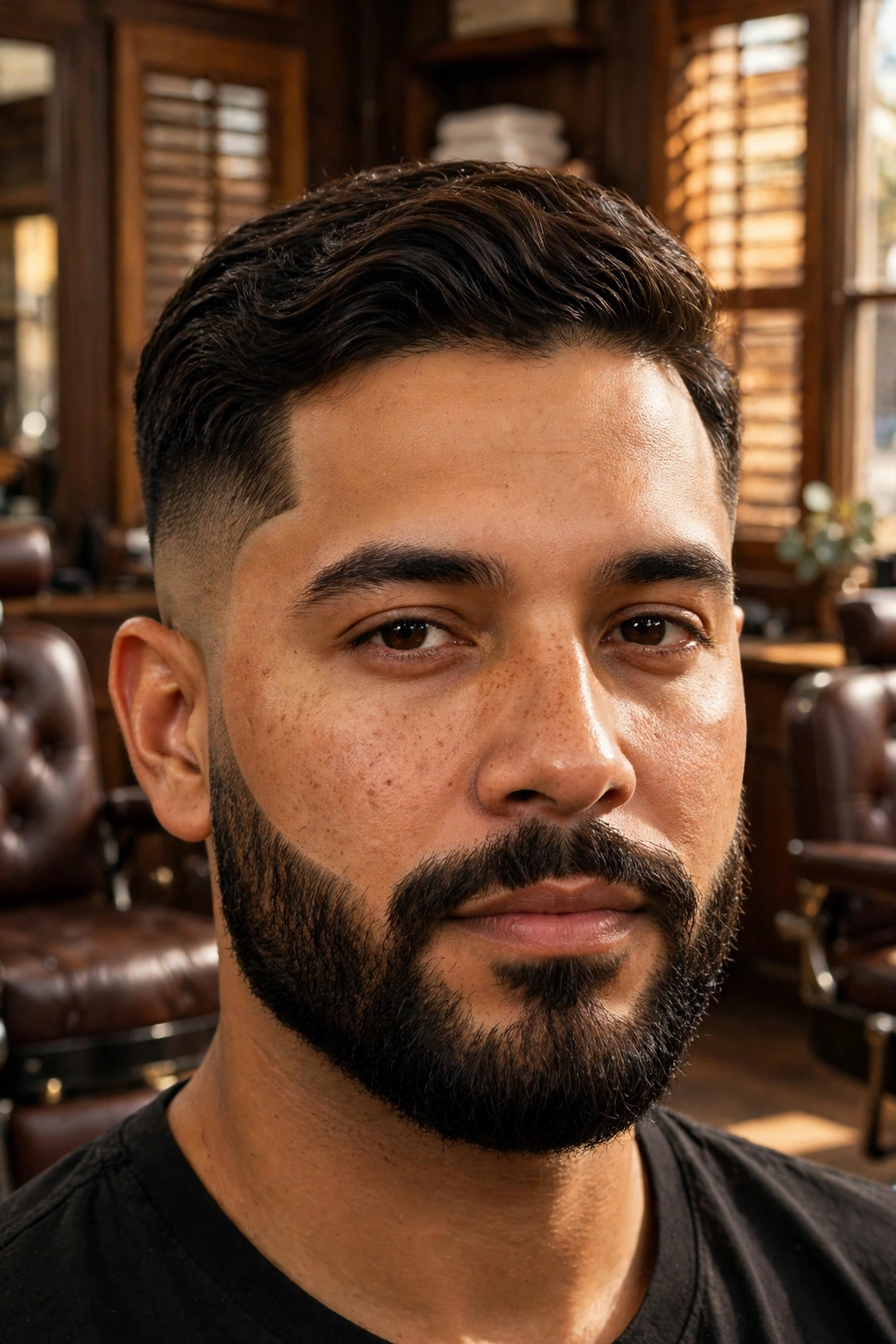
The temple fade with beard blend is the complete grooming package. The temple fade on top flows seamlessly into the beard through a carefully blended transition, connecting the haircut and facial hair into one continuous, sculpted look. This connection is what separates a good cut from a great one — when the fade, sideburns, and beard merge without a visible break, the whole face looks sharper and more defined. Ask your barber to blend the sideburn into the beard with clippers, keeping the beard edges crisp and shaped. Maintain the blend with a beard trimmer between visits, and keep the beard conditioned so it matches the polished finish of the cut. For men with beards, this is the single best way to wear a temple fade.
Frequently Asked Questions
What exactly is a temple fade?
A temple fade is a type of taper haircut where the hair gradually fades from longer to shorter specifically around the temples and sideburn area, rather than fading the entire side of the head. The rest of the sides can stay fuller, which makes it different from a regular fade or high fade. It creates a clean, sculpted contour around the temples that sharpens the whole haircut, and it works with almost any top style — curls, waves, afros, slick-backs, and more.
How long does a temple fade last?
A temple fade typically looks its sharpest for about two to three weeks. After that, new growth starts to blur the gradient around the temples and the crisp contour softens. Men with faster-growing or coily hair may notice the fade losing definition a bit sooner. To keep it looking fresh, most barbers recommend a touch-up or full trim every two to three weeks, though the top of your hair can often go longer between cuts depending on the style.
Is a temple fade good for curly hair?
Yes, the temple fade is excellent for curly hair. The fade removes bulk around the temples and ears while leaving the curls on top untouched, which actually makes the curl pattern look fuller and more defined by contrast. It is one of the most popular pairings in barbershops because the clean faded edges give curly styles a polished, intentional finish instead of an overgrown look. Just ask your barber to keep the fade low so it does not compete with the volume of your curls.
What is the difference between a temple fade and a taper fade?
The terms overlap, but a temple fade is essentially a specific type of taper fade. A taper fade gradually shortens the hair along the sideburns and neckline, while a temple fade concentrates that fading specifically around the temples. Many barbers use the terms interchangeably, and a classic taper often includes a temple fade as part of it. If you want the fade focused only on the temple area with fuller sides elsewhere, say “temple fade” — that tells your barber exactly where to concentrate the taper.
How do I ask my barber for a temple fade?
Tell your barber you want a temple fade and specify how high you want it (low is safest for a first try), whether you want it faded to the skin or kept as a soft taper, and what you want on top. Bring a reference photo — barbers love visual references because they remove guesswork. Also mention your lifestyle: if you need something low-maintenance, ask for a slight fade; if you want a bold statement, ask for a skin fade with sharp edges. Clear communication is the difference between a good cut and a great one.