
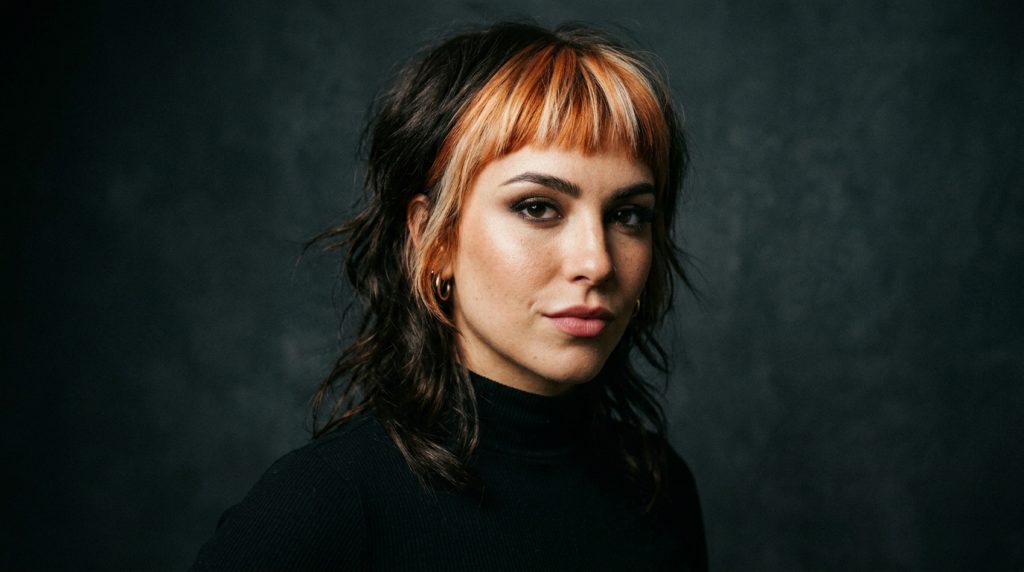
A wolf cut with colored bangs takes a haircut that’s already about movement and texture and adds a focal point that draws the eye straight to the face. Instead of coloring the whole head, the bangs become a deliberate accent — a pop of color, a contrast panel, or a gradient that moves with the layers underneath it.
This guide covers the color techniques that actually work with this cut, how to choose a shade for your base color and skin tone, how long it lasts, and what it takes to maintain — because colored bangs have a very different upkeep schedule than the rest of your hair.
Why Colored Bangs Work So Well on a Wolf Cut
A wolf cut’s whole structure is built around contrast — short choppy layers against longer pieces, texture against movement. Colored bangs add one more layer of contrast on top of that, but concentrated in the one place that’s always visible, no matter how your hair falls or how it’s styled that day.
Because the bangs sit right at the front of the face, even a small section of color reads as intentional and high-impact, without committing your entire head to a bold shade or a difficult maintenance schedule.
Color Techniques to Ask For
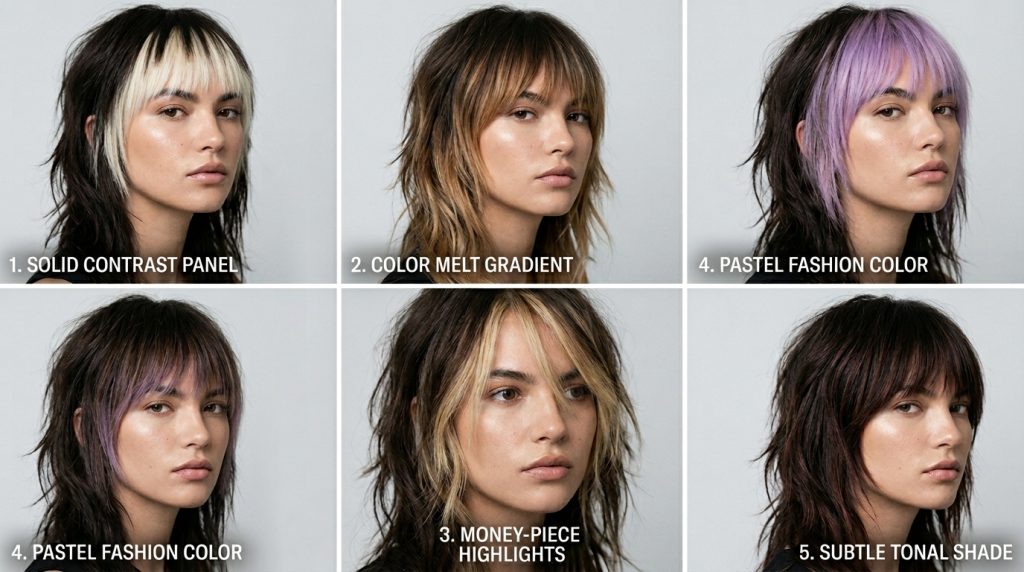
- Solid contrast panel — the bangs are a single, fully saturated color that’s distinctly different from the base (e.g., black hair with platinum or red bangs). The boldest, most graphic option.
- Color melt bangs — a gradient running from your natural root through one or two tones, ending in a different color at the tips. Reads as more “art piece” than “dyed section.”
- Money-piece style bangs — lighter face-framing pieces within the bang section rather than the whole fringe, giving dimension without full saturation.
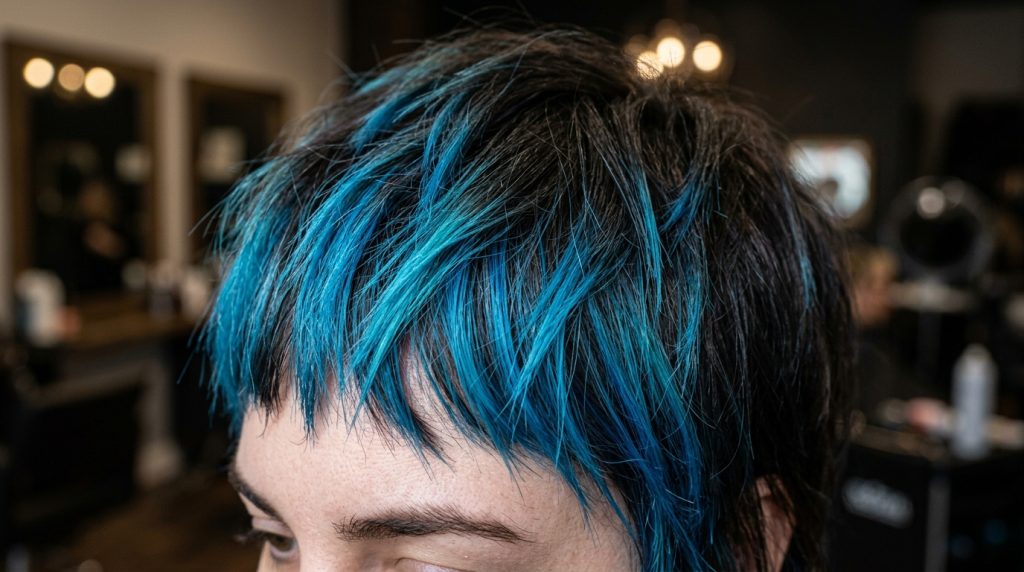
- Pastel or fashion-color bangs — pink, lavender, blue, or mint, usually on a pre-lightened base. Best suited to those willing to keep up with toning between salon visits.
- Subtle tonal bangs — a shade or two lighter or darker than your base, visible mainly in direct light. The lowest-commitment way to try the trend.
Choosing a Shade for Your Base Color
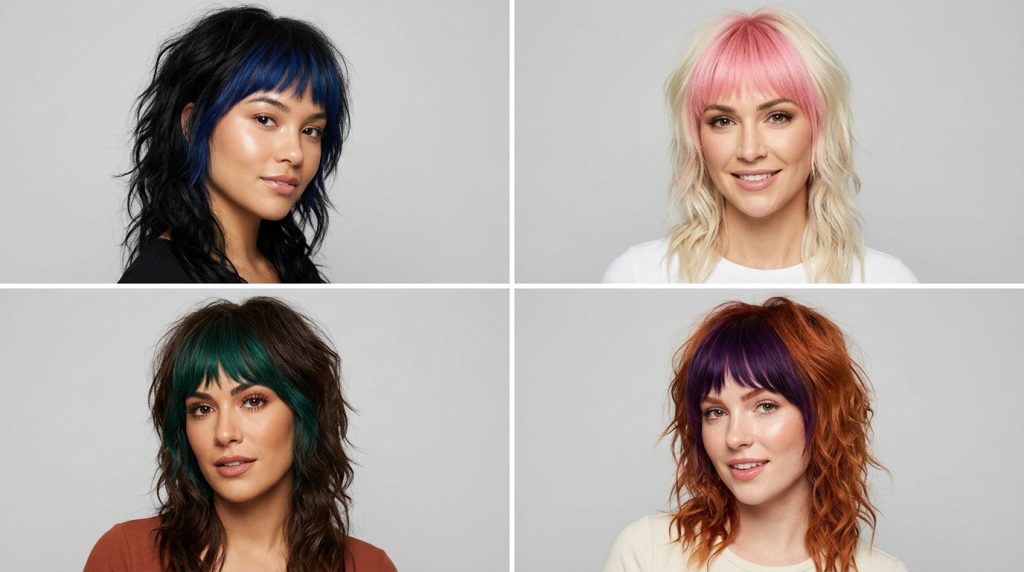
On dark or black hair: High-contrast colors read best — platinum, vivid red, or jewel tones like emerald or sapphire. Expect a pre-lightening step for any bright or pastel shade, since dark hair needs to be lifted before most fashion colors will show true.
On blonde hair: This is the easiest base to work with for fashion colors — pastels, peach, lavender, and rose gold all show up vividly with minimal lifting required.
On brunette hair: Warm-toned bangs (copper, caramel, auburn) blend more naturally, while cool tones (ash, silver, violet) create more visible contrast. Choose based on how bold you want the line between base and bang to read.
On red hair: Complementary jewel tones (deep teal, plum) create striking contrast, while tonal copper or rose-gold bangs blend almost seamlessly for a softer effect.
How the Cut Affects the Color
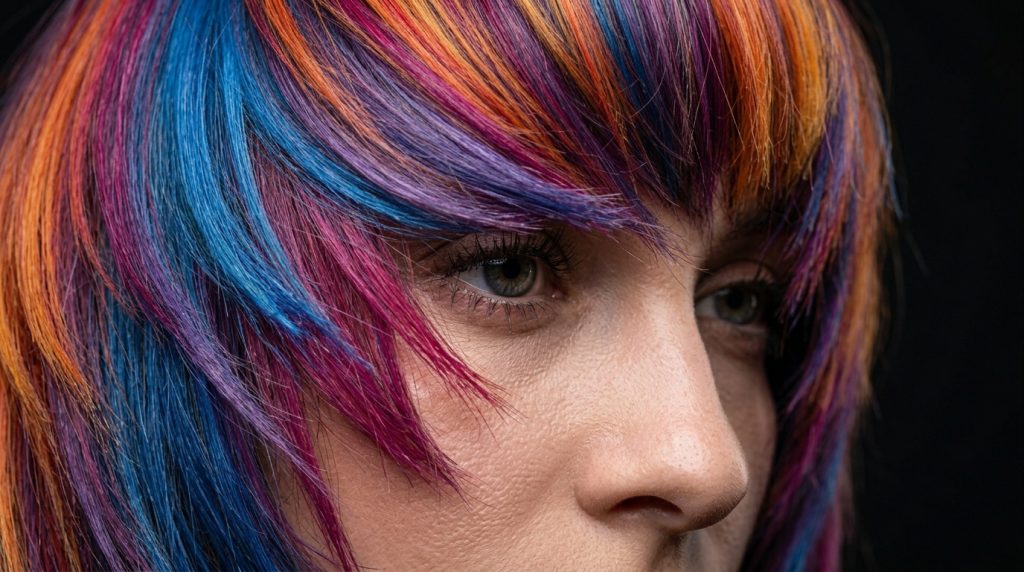
Because a wolf cut’s bangs are layered rather than blunt, color placed there moves differently than it would on a flat, one-length fringe. Choppy, point-cut pieces catch and reflect color in a piecey, dimensional way — which is part of why color melts and gradients photograph so well on this specific cut. A blunt, heavy bang would show the color as one flat block; the wolf cut’s texture breaks it up into visible strands and layers instead.
If you want the color to read as clearly as possible, ask your stylist to keep the bang section slightly less choppy than the rest of the cut — too much fragmentation can scatter the color so much it loses definition from a distance.
Maintenance: What to Actually Expect
| Color type | Touch-up frequency | Notes |
|---|---|---|
| Solid contrast panel (vivid) | Every 3-4 weeks | Vivids fade fastest, especially with washing |
| Pastel/fashion color | Every 4-6 weeks (toning) | Needs purple/blue shampoo between salon visits |
| Color melt | Every 6-8 weeks | Gradual fade is part of the look, more forgiving |
| Tonal/subtle | Every 8-10 weeks | Lowest maintenance, blends as it grows out |
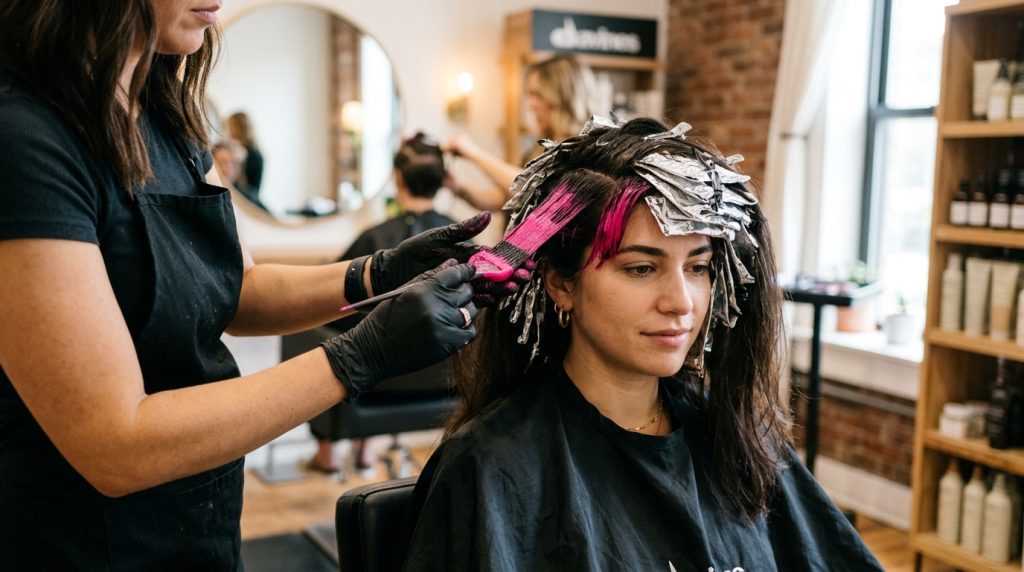
Because the bangs are a small, contained section, full re-color appointments are usually shorter and cheaper than all-over color — but more frequent, since this section sees the most daily exposure to washing, sun, and styling
Protecting the Color Between Appointments
- Wash bangs less frequently than the rest of your hair if possible — dry shampoo at the roots can stretch washes without dulling the color.
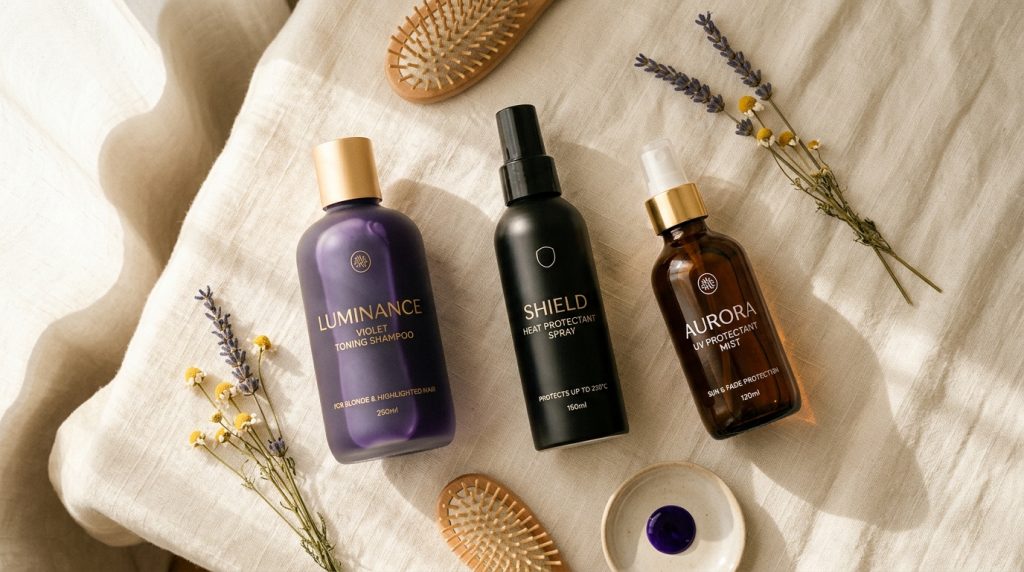
- Use a color-safe, sulfate-free shampoo specifically on the bang section to slow fade.
- Apply UV-protectant spray before sun exposure — vivids and pastels fade fastest from UV exposure, not just washing.
- Skip hot tools when possible, or always use a heat protectant — heat accelerates color breakdown more on chemically treated bangs than on the rest of the cut.
- Rinse with cool water, not hot — hot water opens the hair cuticle and pulls color out faster.
Who This Works Best For
This is an ideal option if you want to experiment with bold or fashion color without committing your entire head — it’s lower-cost, lower-commitment, and reversible faster than an all-over change. It’s also a strong choice if your job or lifestyle has limits on hair color, since the bangs can often be tucked back or pinned for more conservative settings while still giving you the full effect when worn down.
Final Thoughts
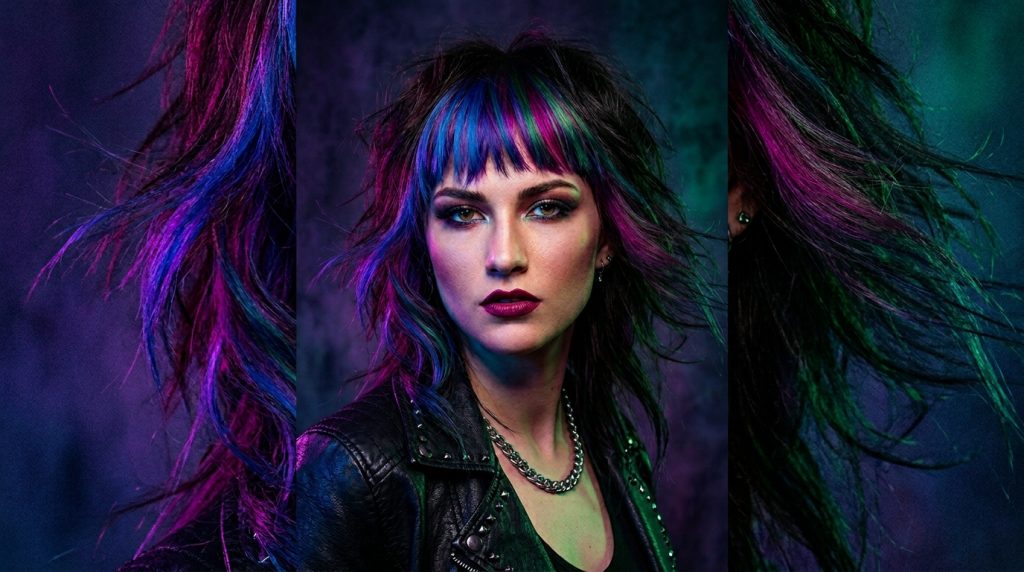
A wolf cut with colored bangs lets you treat your hair color like an accessory rather than a full commitment — change it seasonally, go subtle or bold depending on your mood, and let the cut’s natural texture do the work of making that color look dimensional instead of flat. Talk to your stylist about your base color, how much upkeep you’re realistically willing to do, and let that decide which technique — solid panel, melt, or tonal — is the right entry point.