
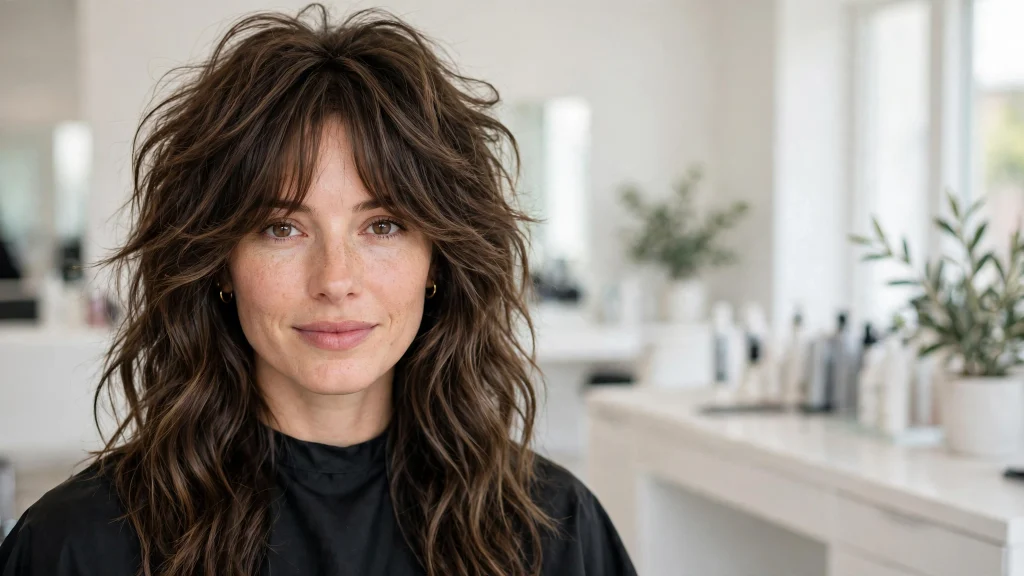
Few hairstyles strike the balance between wild and graceful quite like a long wolf cut with curtain bangs. You get the untamed, textured energy of the wolf cut’s signature layers, softened by the face-framing sweep of curtain bangs — all while keeping the length you love. It’s no wonder this look keeps showing up on runways, red carpets, and your social feeds.
Whether your hair is pin-straight, naturally curly, or somewhere in between, there’s a version of this cut that will work for you. Below, you’ll find 16 gorgeous takes on the style, plus practical advice on who it suits, how to style it, and how to keep it looking fresh.
What Is a Long Wolf Cut With Curtain Bangs?
The wolf cut is a heavily layered haircut that borrows the shaggy texture of a classic shag and the shorter-crown, longer-back shape of a mullet. On long hair, the layers cascade down the back in soft, piecey tiers, creating movement and volume without sacrificing length.
Curtain bangs are the perfect partner for this cut. Parted down the middle (or slightly off-center), they sweep outward on both sides of the face like curtains, blending seamlessly into the surrounding layers. The result is soft, flattering, and effortlessly cool.
What makes this combination so popular is how forgiving it is. The layers add shape to long hair that might otherwise hang flat, the bangs draw attention to your eyes and cheekbones, and the whole look grows out beautifully — no awkward in-between phase.
16 Stunning Long Wolf Cut With Curtain Bangs Ideas
1. Malibu Blonde Wavy Wolf Cut
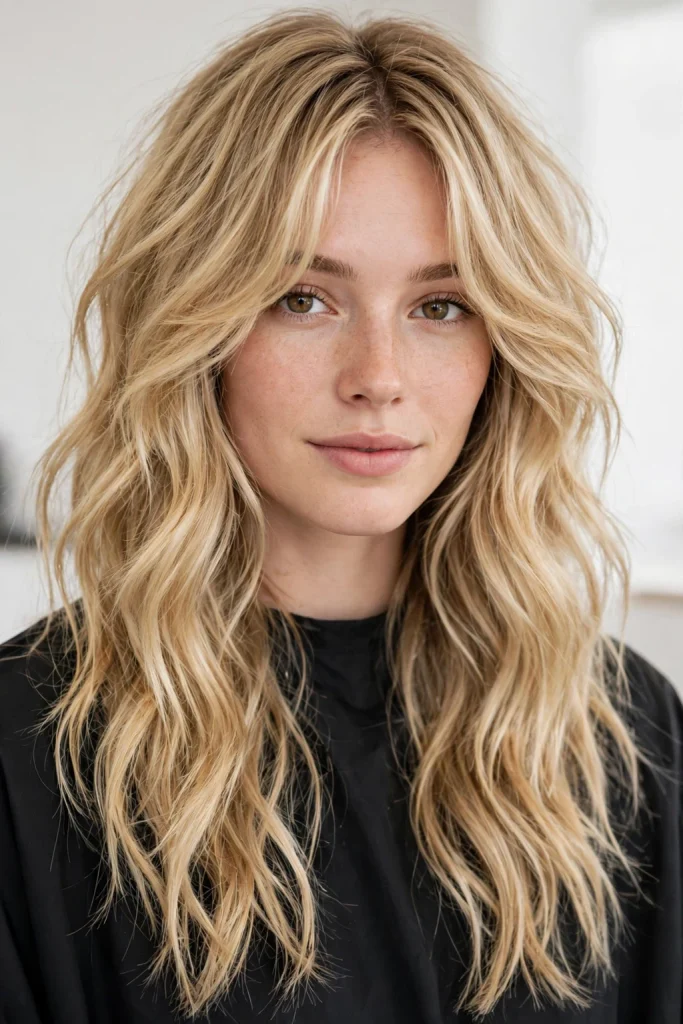
There’s something undeniably magnetic about malibu blonde on a long wolf cut. The bright, sun-washed color catches light at every angle, making each textured layer stand out and giving the whole style a luminous, beachy glow. When those golden tones meet soft curtain bangs, the result is equal parts glamorous and laid-back — the kind of hair that looks like you just stepped off the sand.
Styling this look is wonderfully low-effort. Scrunch a little sea salt spray into damp hair and let it air-dry, or diffuse for extra volume at the crown. The curtain bangs can be swept to the sides with a quick blow-dry, and they blend so naturally into the waves that even second-day hair looks intentional. This variation suits warm and neutral skin tones best, and it’s a fantastic choice if you want a color that feels fresh and youthful without veering into platinum territory.
2. Chocolate Brown Wavy Wolf Cut
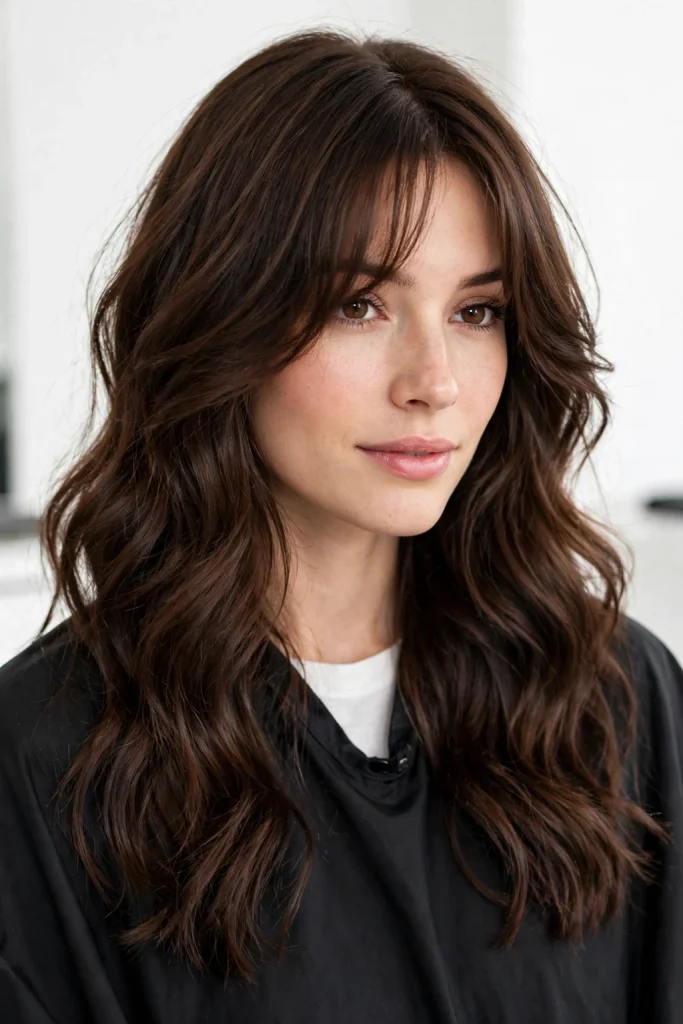
Chocolate brown is the ultimate rich-girl shade for a long wolf cut. Deep, glossy, and dimensional, it gives the layered texture incredible depth — every wave and piecey end catches the light differently. The curtain bangs melt into the surrounding waves for a romantic, touchable finish that feels both polished and relaxed.
This look is beautifully versatile. Wear it smooth and defined for formal occasions, or rough it up with texture spray for an edgier weekend vibe. It flatters warm, neutral, and even cool skin tones, and the dark base means regrowth is far less obvious than with blonde. If you’re after a color that’s timeless but never boring, chocolate brown delivers — and on wolf cut layers, it has a movement and shine that’s hard to beat.
3. Dark Brown Straight Wolf Cut With Choppy Bangs
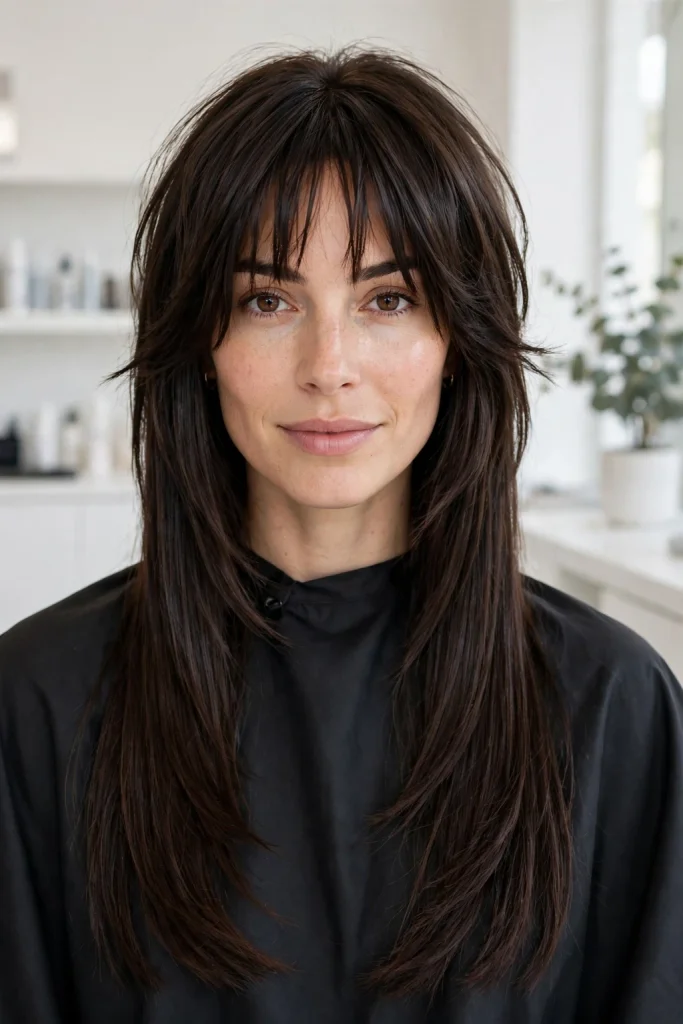
Who says wolf cuts have to be wavy? A straight long wolf cut with choppy curtain bangs proves that sleek can be just as striking. The smooth lengths show off the precision of the layering, while the piecey, textured fringe adds just enough rebellion to keep things interesting. It’s edgy without being messy — perfect for professional settings.
The key to this style is healthy shine, so invest in a good smoothing serum and a heat protectant. Blow-dry with a paddle brush for sleekness, then piece out the bangs with a tiny bit of styling cream. This variation is especially flattering on oval and heart-shaped faces, and it’s a great option if you love the wolf cut silhouette but prefer a more controlled, put-together finish.
4. Golden Brown Wavy Wolf Cut
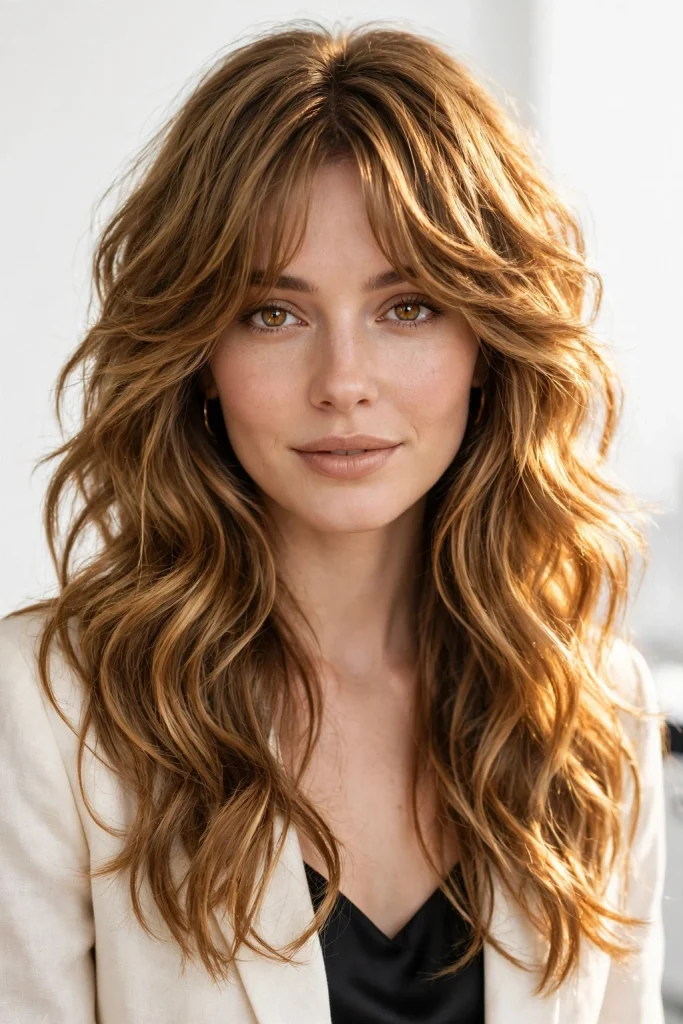
Golden brown sits in that perfect sweet spot between blonde and brunette, glowing warmly on long wolf cut waves. The color has a natural, sunlit quality that makes the layers look thicker and more dimensional, while curtain bangs add a soft frame that highlights the eyes. It’s the kind of shade that earns compliments from strangers.
What makes golden brown so appealing is its adaptability. It works across seasons, complements most skin tones, and grows out gracefully if you ever want to go darker or lighter. Style it with loose waves for daytime ease, or add a bit more polish with a round brush blowout for evenings. If you want warmth and radiance without a dramatic color commitment, this is your shade.
5. Curly Coffee Brown Wolf Cut With Micro Bangs
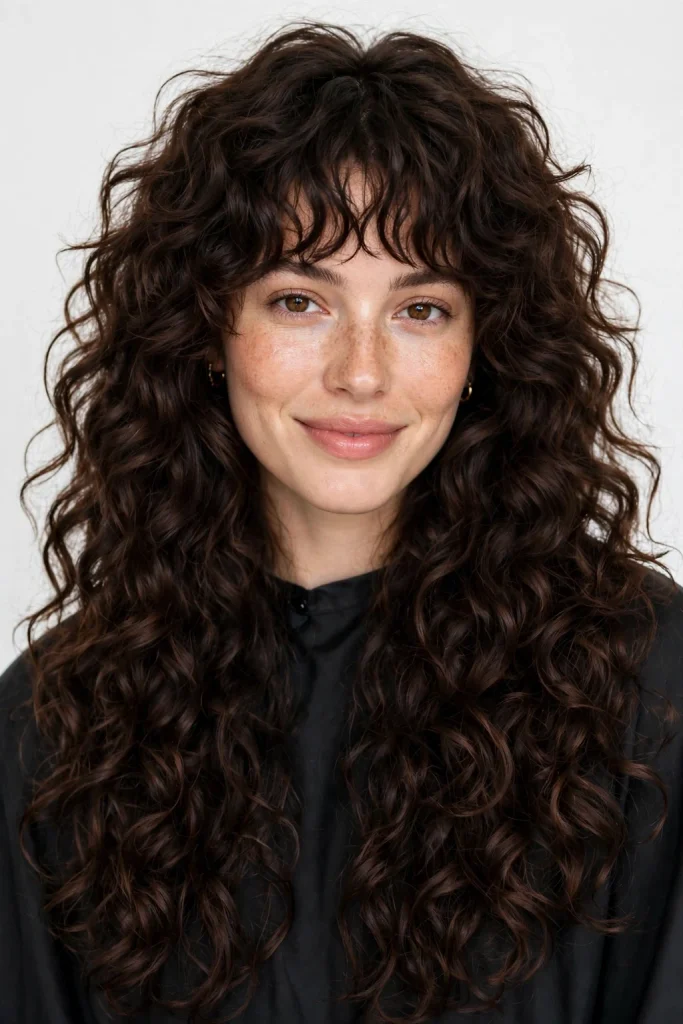
Curly hair and the wolf cut were made for each other. Deep coffee brown curls shaped into long, cascading layers create jaw-dropping volume and definition, while shorter micro curtain bangs keep the fringe light, bouncy, and full of personality. The contrast between the compact fringe and the full, flowing lengths is utterly captivating.
For styling, lean into your natural texture: apply curl cream to soaking-wet hair, scrunch upward, and diffuse on low heat. The micro bangs should be shaped while damp and left to spring up naturally — resist the urge to over-manipulate them. This look is ideal for 2C to 3C curl patterns and anyone who wants a bold, fashion-forward style that celebrates rather than fights their texture.
6. Night Brown Mullet Wolf Cut With Extended Bangs
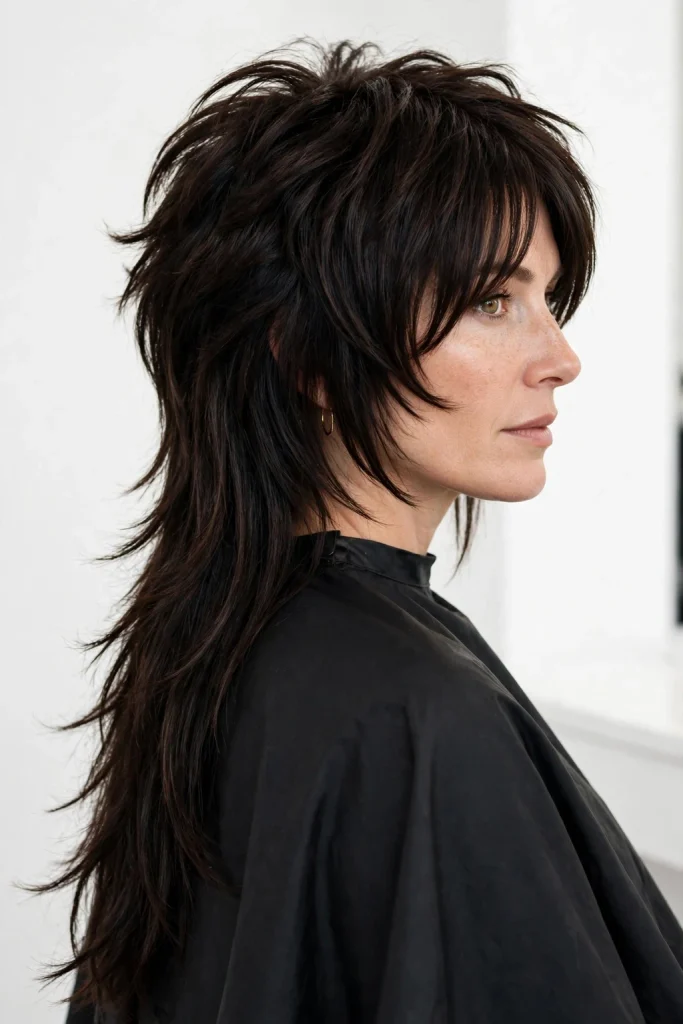
If subtle isn’t your thing, the night brown mullet wolf cut delivers maximum impact. This variation leans hard into the wolf cut’s mullet DNA — shorter, voluminous layers at the crown melting into dramatically longer lengths at the back. Extended curtain bangs that graze the cheekbones add a sultry frame, balancing the boldness of the silhouette.
Deep night brown keeps the look grounded and mysterious, letting the cut itself do the talking. Style the crown with a diffuser for lift, let the back fall naturally, and sweep the long bangs outward with a round brush. This is a statement style for confident personalities, and it photographs incredibly well. Fair warning: you’ll get asked about your hair everywhere you go.
7. Brown Wavy Wolf Cut With Wispy Bangs
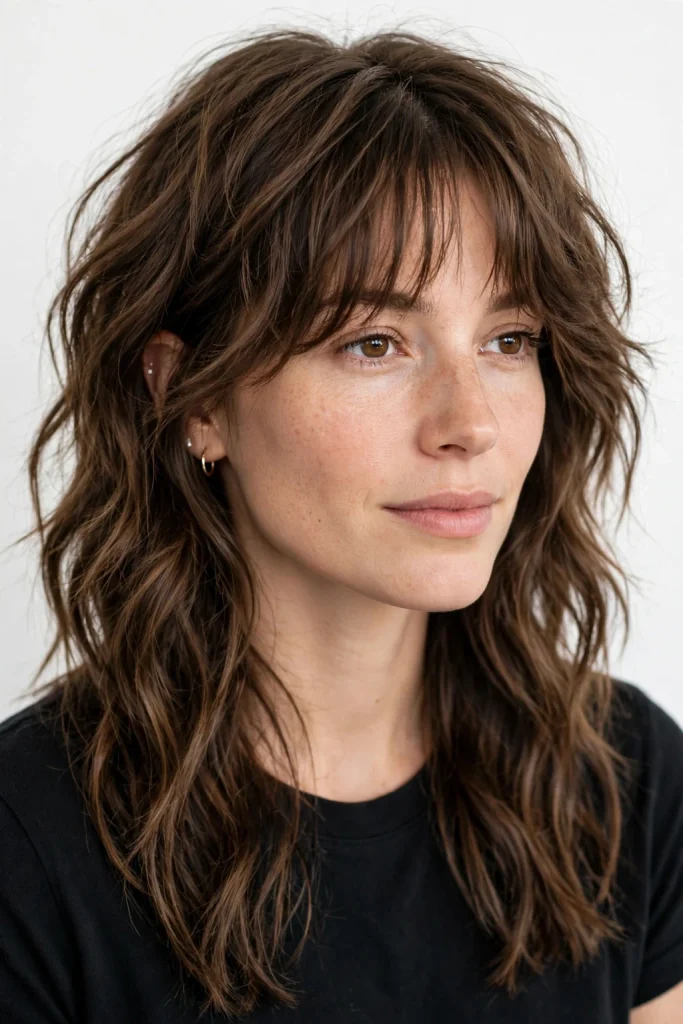
Wispy curtain bangs are the gentle introduction to fringe that commitment-phobes dream of. Feather-light and softly textured, they add movement around the face without the heaviness of a full bang. On a brown wavy wolf cut, they create an airy, romantic effect — the kind of effortless beauty that looks like you woke up this way.
The grow-out is where wispy bangs truly shine: they blend into the surrounding layers seamlessly, so there’s never an awkward phase. A quick blow-dry with your fingers is all they need, and they pair beautifully with the wolf cut’s tousled texture. If you’re trying bangs for the first time or have a longer face shape that benefits from softness rather than structure, start here.
8. Dark Ginger Wavy Wolf Cut
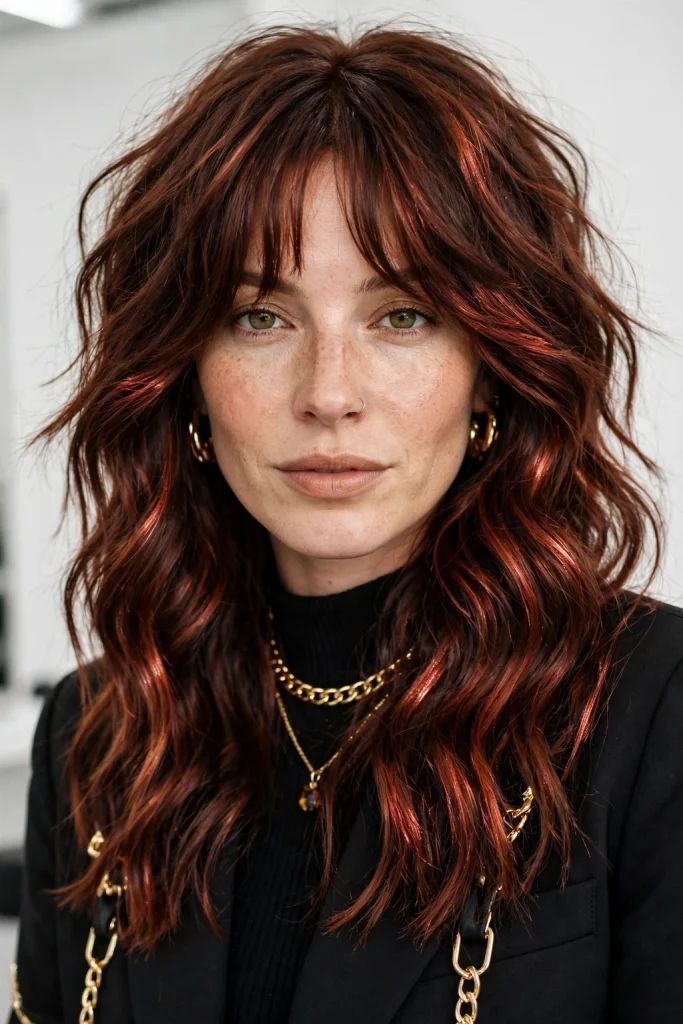
Dark ginger is having a major moment, and on a long wavy wolf cut it’s nothing short of spectacular. The deep copper-red tones have an almost metallic richness that shifts and glows as the waves move, giving the layered cut incredible dimension. Curtain bangs in this shade frame the face like a warm halo.
This color works magic on fair to medium skin tones, bringing out warmth in the complexion. To keep the color vibrant, use color-safe, sulfate-free products and consider a gloss treatment every couple of months. Style with soft waves to show off the color’s depth, and let the curtain bangs fall naturally — this is a look that thrives on a little beautiful chaos.
9. Golden Champagne Mullet Wolf Cut
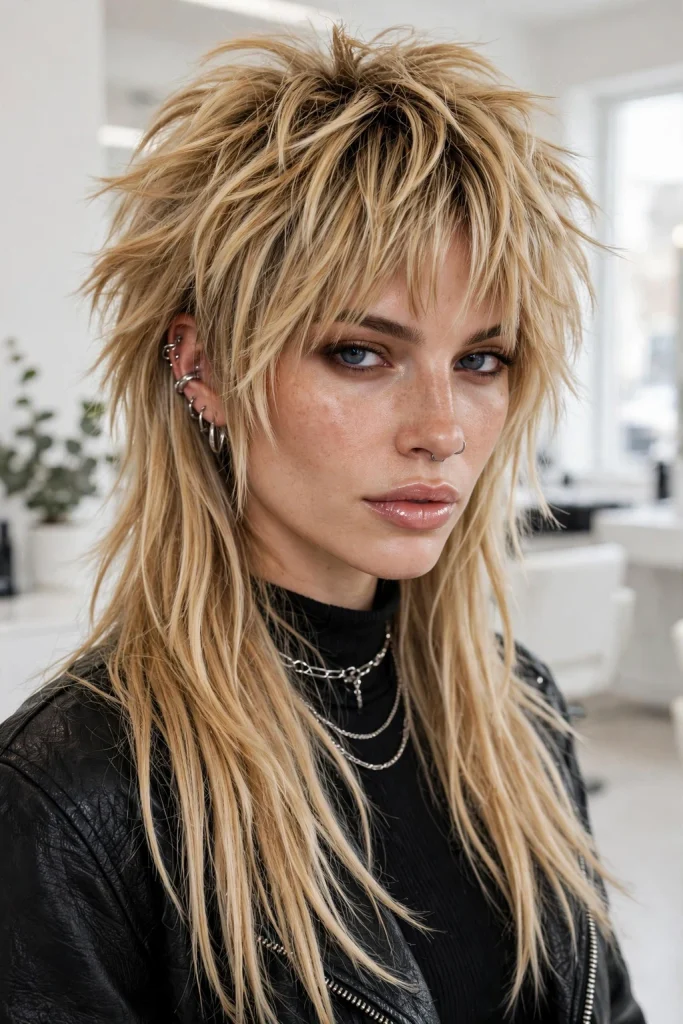
Golden champagne is luxury in hair-color form — a luminous blend of gold and pale blonde that looks expensive from every angle. On a mullet-inspired wolf cut with choppy curtain bangs, it’s pure editorial glamour. The two-tone dimension runs through every layer, and the textured fringe keeps the whole look modern rather than precious.
This is a higher-maintenance color that rewards the effort: regular toning appointments keep brassiness at bay, and purple shampoo once a week preserves the cool champagne notes. Style with tousled waves and piecey bangs for maximum impact. If you want a head-turning, red-carpet-ready version of the wolf cut, golden champagne is it.
10. Auburn Layered Wolf Cut
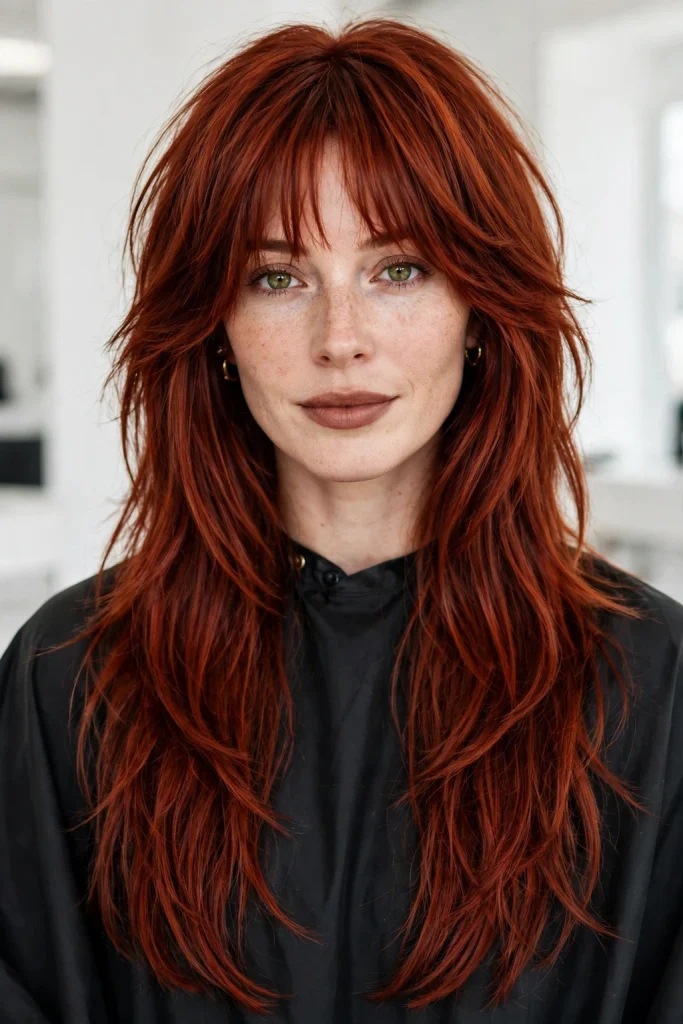
Auburn’s rich, fiery depth brings instant drama to long wolf cut layers. The red-brown tones glow against the skin and make every layer look intentional and sculpted, while choppy curtain bangs add a contemporary edge. It’s a color with history and attitude — classic, yet never dated.
Auburn flatters a wide range of skin tones, from porcelain to deep, because of its balanced warm-cool depth. Keep the color fresh with color-depositing conditioners between salon visits, and style the layers with soft bends rather than tight curls to show off the shade’s richness. This variation is perfect if you want a bold color that still feels sophisticated and wearable every day.
11. Curly Black Mullet Wolf Cut With Micro Bangs
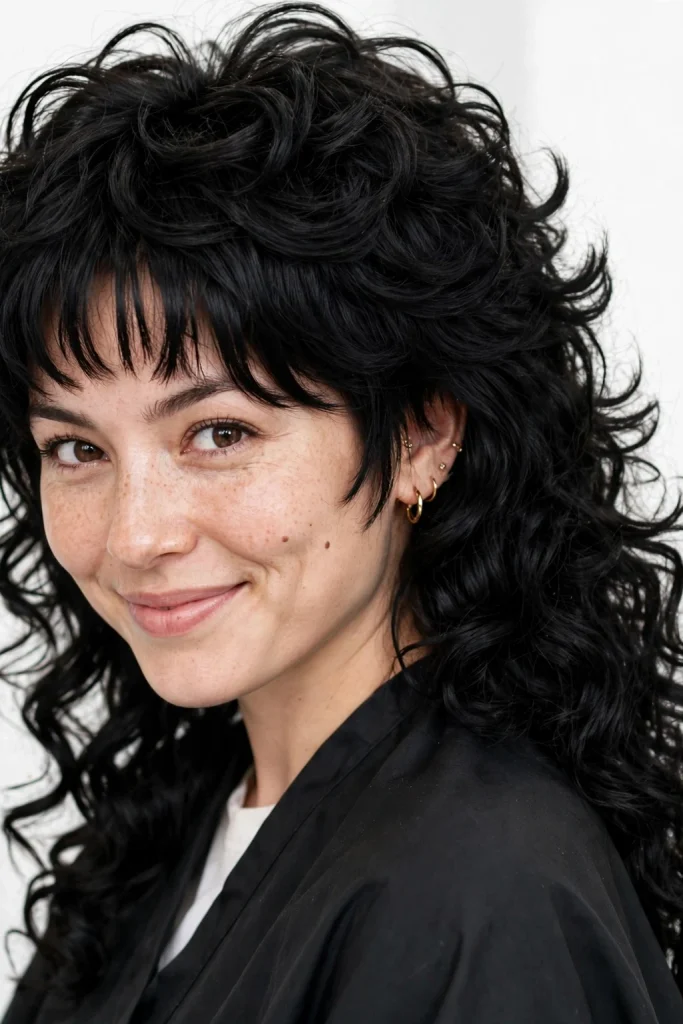
Jet-black curls shaped into a mullet wolf cut create one of the most striking silhouettes in this entire collection. The dark color amplifies every curl and layer, giving the style incredible graphic impact, while micro curtain bangs add a playful, doll-like touch at the front. It’s bold, artistic, and unforgettable.
Styling is all about definition: use a rich curl cream and diffuse carefully to encourage uniform curl clumps. The micro bangs should be kept short and springy — trim them regularly, as curly fringe grows out faster than you’d expect. This look suits confident personalities and anyone whose natural curl pattern deserves to be the star of the show.
12. Bronde Face-Framing Wolf Cut
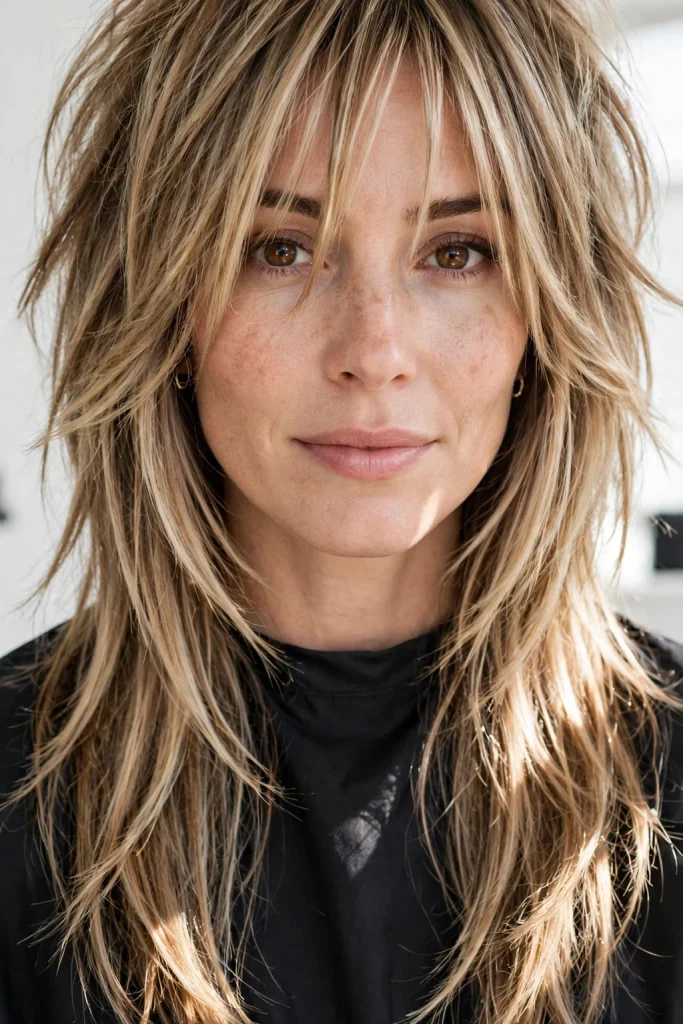
Bronde — the perfect marriage of brown and blonde — might be the most flattering hair color ever invented for layered cuts. On a long wolf cut, the blended tones create light and shadow through every tier, making hair look thicker and more dynamic. Elongated curtain bangs amplify the face-framing effect, drawing the eye to your best features.
This color is wonderfully low-maintenance since the grow-out is soft and natural. It suits nearly every skin tone, which explains its enduring popularity. Style it straight to show off the seamless blend, or add waves for extra dimension. If you can’t decide between blonde and brunette, bronde lets you have both — and on wolf cut layers, the result is luminous.
13. Black Wavy Mullet Wolf Cut
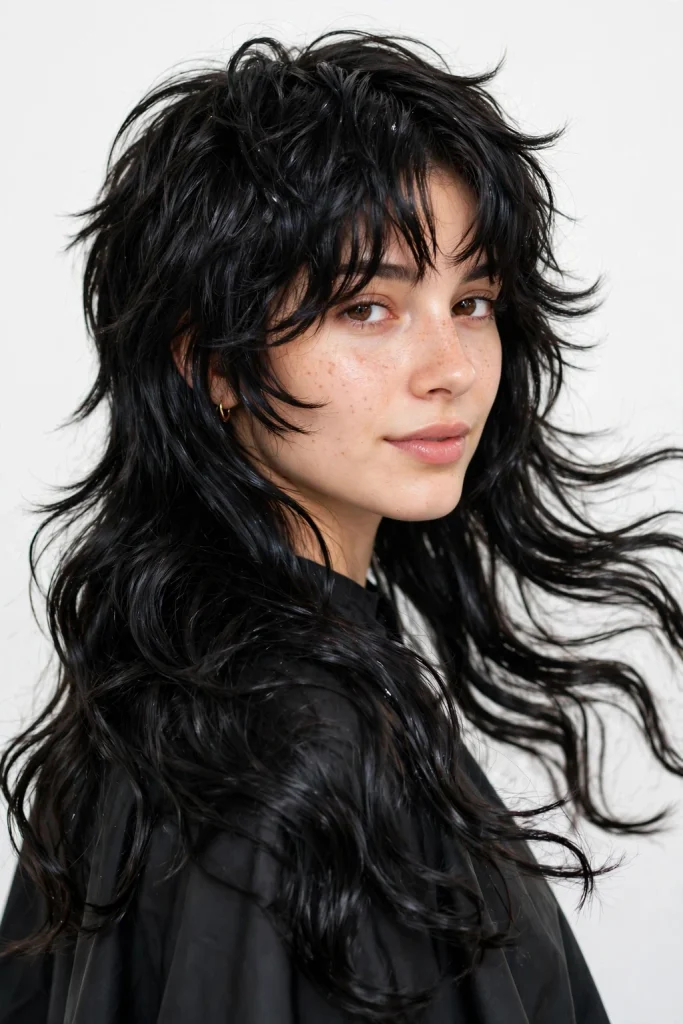
Proof that single-tone hair can be endlessly interesting, the black wavy mullet wolf cut is all about texture. Layers upon layers of waves create a bouncy, fluffy finish with constant movement, while wavy curtain bangs blend right into the flow. The glossy black shade acts like a mirror for shine, making healthy hair look absolutely liquid.
The secret to this look is moisture — black hair shows dryness more readily, so regular deep conditioning is non-negotiable. Style with a diffuser and a light curl-enhancing mousse, and let the bangs fall where they may; their waviness is part of the charm. This is an effortlessly cool, rock-and-roll take on the trend that works for any age.
14. Dark Brown Wolf Cut With Classic Bangs
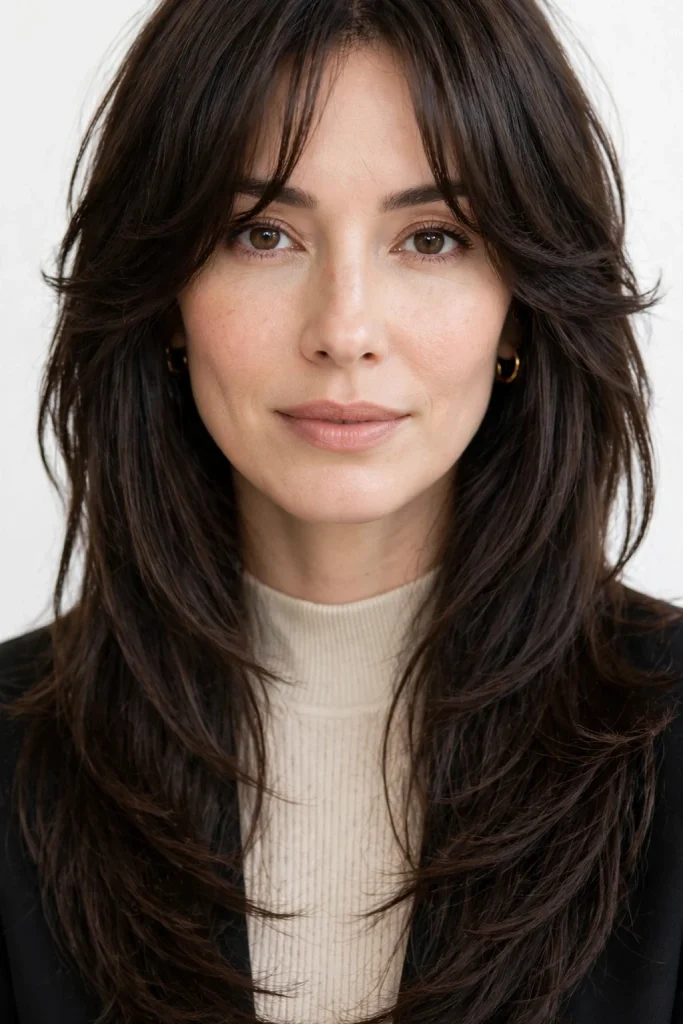
Sometimes the classics win for a reason. A dark brown long wolf cut with softly parted, classic curtain bangs is timeless — elegant enough for any occasion, interesting enough to never feel plain. The layers give straight or slightly wavy hair beautiful shape, while the bangs add that essential face-framing softness.
This is arguably the most versatile entry on the list. It suits virtually every face shape, works in conservative workplaces, and requires minimal styling: a blow-dry with a round brush, or even just air-drying with a little smoothing cream. If you want the wolf cut experience without any extremes of color or texture, this refined version is your safest — and chicest — bet.
15. Bronde Balayage Layered Wolf Cut
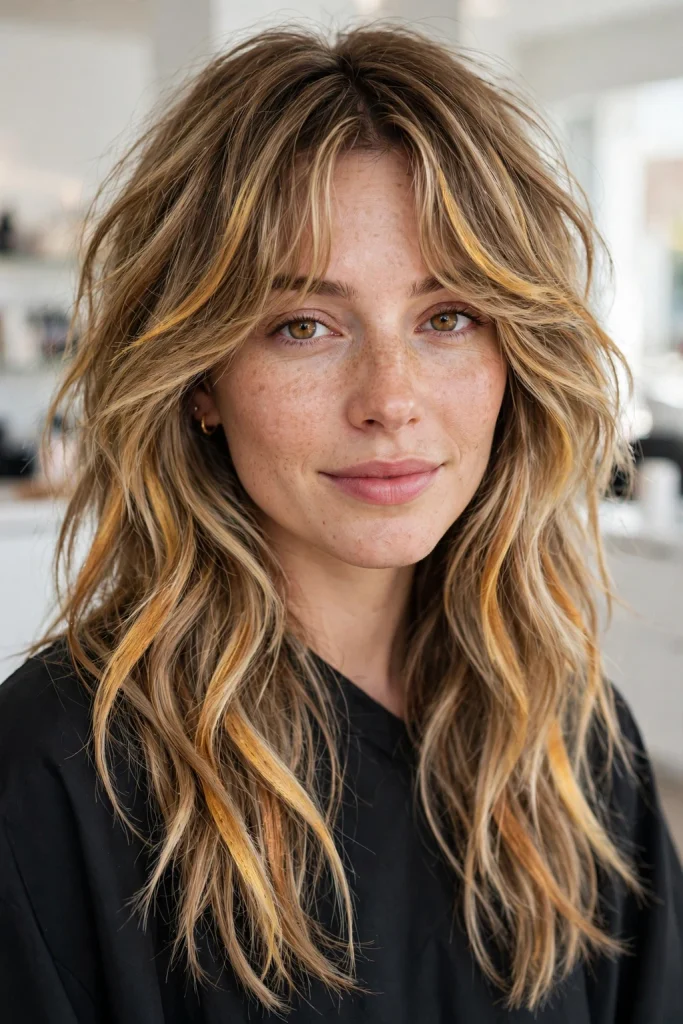
Balayage and the wolf cut are a match made in hair heaven. Hand-painted bronde ribbons swept through long layers create sun-kissed dimension that looks completely natural, as if your hair just happens to catch the light perfectly. Wavy curtain bangs complete the picture, tying the face-framing brightness together.
This is the ultimate seasonal refresh — especially gorgeous heading into fall, when the warm bronde tones echo the changing leaves. The grow-out is famously graceful, so you can stretch salon visits further than with traditional highlights. Style with loose, undone waves to show off the balayage placement, and enjoy the endless compliments.
16. Black Wavy Wolf Cut With Extended Bangs
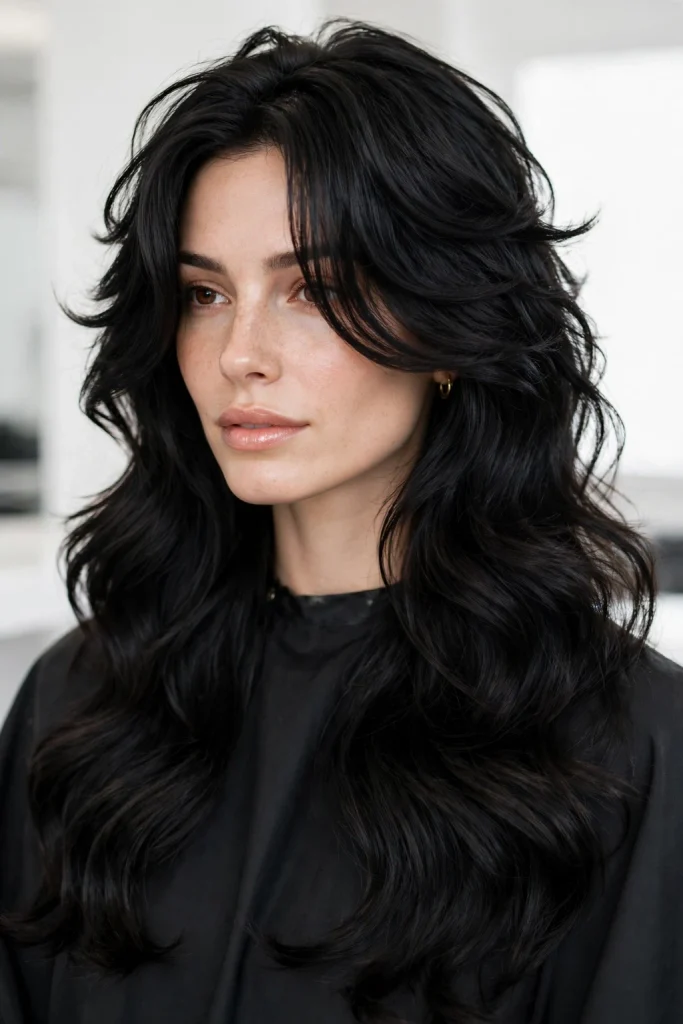
Long, flowing black waves paired with elongated curtain bangs create a look that’s nothing short of majestic. This variation needs no color tricks or extreme texture — just healthy, glossy length, softly sculpted layers, and bangs that sweep gracefully past the cheekbones. It’s the wolf cut at its most elegant and powerful.
Length is the star here, so prioritize hair health: regular trims to prevent split ends from traveling up, silk pillowcases to reduce friction, and minimal heat styling. Wear the waves soft and brushed-out for a glamorous finish, or define them for more edge. If you love your length and want drama without damage, this is the one.
Who Should Try This Haircut?
The long wolf cut with curtain bangs is one of the most adaptable styles out there:
- Hair types: Wavy and curly hair shine with minimal effort since the cut enhances natural texture. Straight hair works wonderfully too — the layers create movement that straight hair often lacks.
- Face shapes: Oval and heart-shaped faces look fantastic with curtain bangs. Round faces benefit from longer, extended bangs that elongate, while square faces are softened by wispy, feathered pieces.
- Lifestyle: If you want long hair with personality but not a high-maintenance routine, this is your cut. The textured layers look better slightly undone, so it’s perfect for busy schedules.
One caution: because the wolf cut removes weight through layering, very fine or thin hair can end up looking sparser. Ask your stylist for longer, softer layers to preserve density.
How to Style a Long Wolf Cut With Curtain Bangs
Styling is refreshingly simple:
- Start with damp hair. Work a lightweight mousse or curl cream through the lengths to encourage your natural texture.
- Dry with movement. Rough-dry with your fingers or use a diffuser, scrunching upward to build volume at the crown and enhance the waves.
- Shape the bangs. While the fringe is still damp, part it down the middle and blow-dry each side outward with a round brush for that signature curtain sweep.
- Add separation. Finish with a pea-sized amount of styling cream or a mist of texture spray, focusing on the ends to define the layers.
Non-wash-day refresh: spritz the lengths with water mixed with a little leave-in conditioner, scrunch, and reshape the bangs with a quick blast of the dryer. Dry shampoo at the roots keeps everything fresh between washes.
Maintenance Tips
- Trim every 8–10 weeks. Long wolf cuts grow out gracefully, but regular trims keep the layers intentional and the bangs at the right length.
- Deep condition every two weeks. Long, layered ends are prone to dryness, so a hydrating mask keeps them soft and frizz-free.
- Use sulfate-free shampoo. Gentle formulas protect your color (especially blonde, bronde, and balayage) and preserve natural wave patterns.
- Protect from heat. Always apply a heat protectant before blow-drying or using hot tools on the layered ends.
- Detangle gently. Use a wide-tooth comb on damp, conditioned hair to avoid breakage in the textured layers.
FAQs
Will curtain bangs suit my face shape?
Curtain bangs are among the most universally flattering fringe styles. Your stylist can adjust the length and parting — longer pieces for round faces, wispier texture for square faces — to suit you perfectly.
Can I get a wolf cut if my hair is straight?
Absolutely. The layers themselves create shape and movement. You can enhance waves with a diffuser, braids overnight, or a large-barrel curling iron whenever you want extra texture.
How long does it take to grow out?
One of this cut’s biggest perks is its graceful grow-out. The layers blend as they grow, and curtain bangs can be swept to the sides or pinned back during the awkward phase.
Is this haircut good for thick hair?
Yes — it’s excellent for thick hair. The heavy layering removes bulk and weight, making thick hair more manageable while adding beautiful movement.
What should I tell my stylist?
Bring reference photos and ask for long, heavily textured layers with a shorter crown, longer back, and curtain bangs parted in the middle. Mention your natural texture so they can cut accordingly.
Final Thoughts
The long wolf cut with curtain bangs truly offers the best of both worlds: the edgy, lived-in character of the wolf cut and the soft, face-flattering charm of curtain bangs, all without giving up your length. With 16 stunning variations to choose from — spanning every color and texture — there’s a version waiting with your name on it.
Ready for the chop? Save your favorite looks, book that salon appointment, and get ready to turn heads. And if you try one of these styles, drop a comment and tell us which one stole your heart!